Say a hurricane makes the evening news, and by morning your Facebook feed is full of donation links promising to help storm victims. One name sounds familiar. Another has a heart-wrenching photo. Which one is real?
That's exactly the moment scammers are counting on. It's also the heart of a disaster relief donation scam: a fake charity, or an impersonation of a real one, set up fast to catch people while their guard is down and their heart is open.
Here's the one thing to check before you give
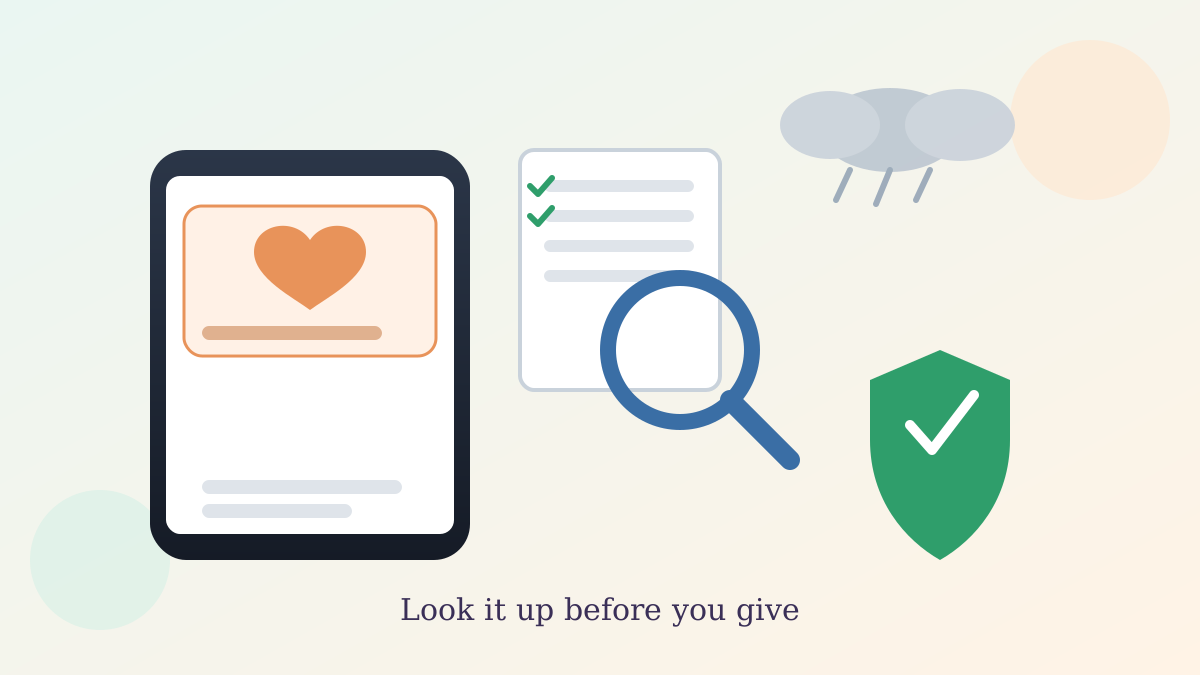
Before you send a dollar, look the charity up on Give.org or Charity Watch. Both are free, independent, and let you search a charity by name in seconds.
The FTC's own August 2026 consumer alert says this single habit is the best defense: search first, then donate — not the other way around. A charity that showed up online the same week as the disaster, with no track record on either site, is a red flag worth taking seriously.
Why this happens right after every storm
Scammers know generosity spikes right after a hurricane, wildfire, or earthquake hits the news. So they move fast, building lookalike websites or spinning up social media pages that borrow a well-known charity's name and logo.
Some don't even bother with a fake identity — they just impersonate a real, respected organization, hoping you won't check the sending email address or link closely enough to notice it's off by a letter or two.
Watch for these government imposter tricks too
The FCC's official after-storms guide flags a related scam: someone posing as a FEMA or Small Business Administration official, calling or texting to ask for payment or bank details.
Real disaster aid from FEMA or the SBA never requires a fee to apply. If a caller asks for money to "process" your application or a donation, hang up and call the agency back using the number on its official website — never the one the caller gave you.
A detail worth knowing: how they ask you to pay
I keep an eye on scam reports for this site, and one pattern shows up over and over — legitimate charities accept a credit card, a check, or a normal payment app. If someone insists you can only pay by gift card, wire transfer, or cryptocurrency, that alone is enough reason to stop and walk away. No real charity has ever required that.
A quick habit that covers most of it
Before donating to any cause you saw on social media or got a text about:
- Search the exact charity name plus the word "scam" or "reviews"
- Look it up on Give.org or Charity Watch
- If you got a text asking you to donate, verify the number on the charity's own website first, not the one in the text
That's really the whole checklist, and it takes less time than the donation itself.
If a request for help ever feels rushed or guilt-driven, that pressure is itself a clue — real relief organizations are glad to wait a day while you check them out. For more everyday ways to slow down before you pay or click, see our guides on verifying an unexpected invoice email without clicking anything and checking a bill-pay text before you act on it. And if a storm is actually headed your way, our hurricane preparedness checklist covers the practical side of getting ready.
Helping people after a disaster is a good instinct — a two-minute check just makes sure your money actually gets there.