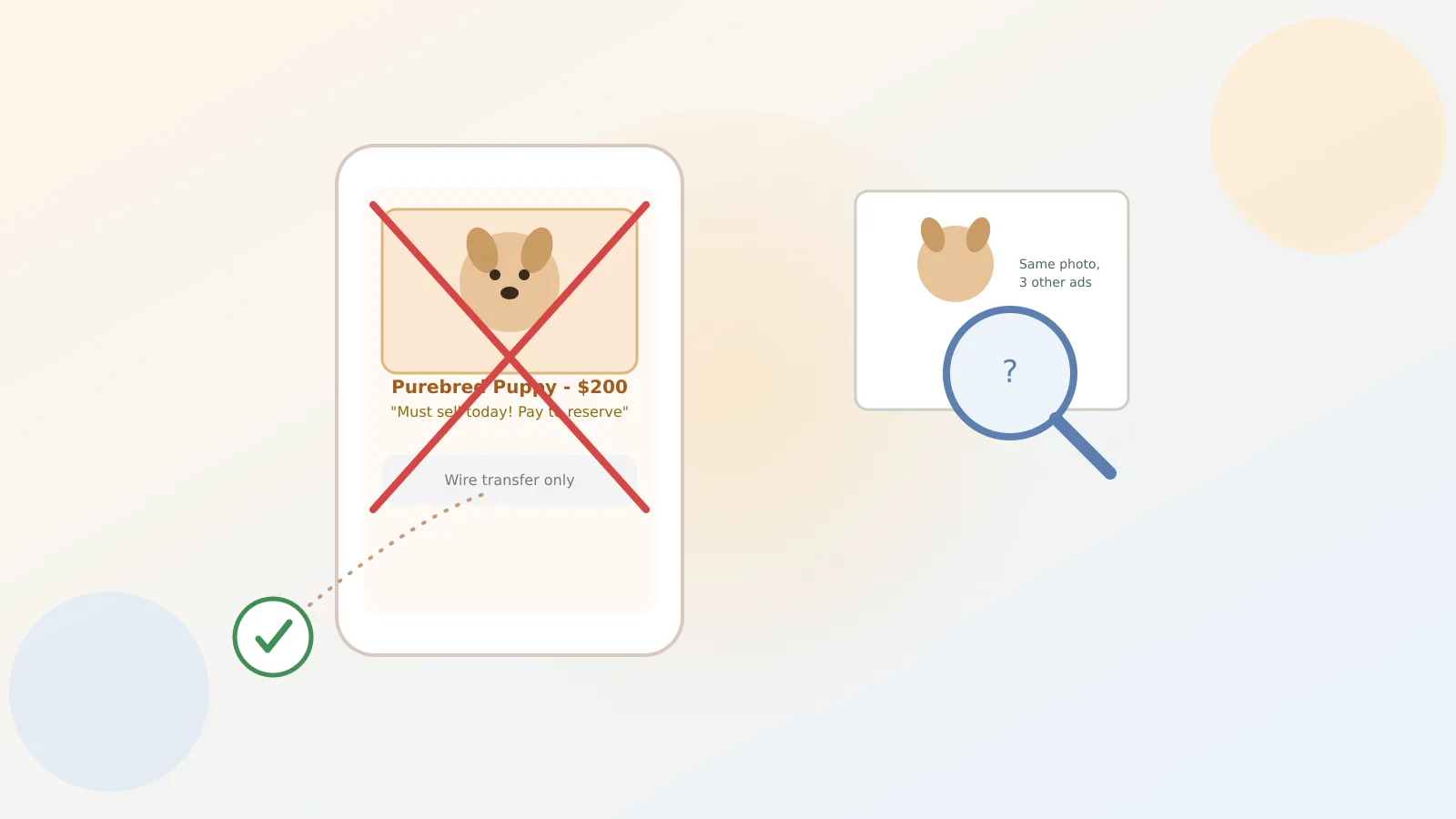
Say your granddaughter has been asking for a puppy all year, and you spot the perfect ad online: a fluffy golden retriever, a few hundred dollars, "must go this week." Before you send a deposit, take a breath. That listing might not have a real puppy behind it at all.
How can I tell whether an online ad for a puppy or kitten is from a real seller before I pay a deposit or "shipping fee"?
The Federal Trade Commission, the government agency that tracks and warns about consumer scams, says the giveaway is almost always the price and the pressure. A purebred puppy advertised for a few hundred dollars, when that breed usually costs thousands, is a red flag by itself.
The one thing to do first
Do a reverse image search on the puppy's photo before you contact the seller at all. Save the picture, then upload it to Google Images or TinEye. If that same "one-of-a-kind" puppy shows up on five other sites, you've found your answer.
Why this scam works so well on people buying a gift
Buying a pet for a grandchild adds urgency and emotion, exactly what scammers count on. They know you want to make a kid happy fast, so they push you to wire money before you've had time to think it through.
The payment request is the second giveaway
Real breeders and shelters let you see the animal, meet in person, or at least video call before any money changes hands. Scammers insist on payment apps, wire transfers, or gift cards, and they almost always tack on a surprise "crate fee" or "shipping fee" right after you pay the first amount.
What a legitimate seller actually looks like
A real breeder or rescue will happily answer questions, share more photos and videos on request, and let you visit or arrange a local pickup. If a seller only communicates by text or email and always has an excuse for why a call or visit isn't possible, that's worth noticing.
A couple of habits worth keeping
- Search the seller's name, phone number, or email along with the word "scam" before paying anything.
- Consider a local shelter or rescue first. You can meet the pet in person, and fees are usually far lower than a "purebred deal" online.
One detail worth knowing: scammers often reuse the exact same puppy photos across dozens of ads with different seller names and cities, which is why the reverse image search works so well. I tried it myself last week on a listing a friend sent me, and the same picture turned up on three unrelated "breeder" sites in different states.
If you've already paid, contact your bank or card issuer right away, since some payment methods can still be reversed if you act quickly, or report it at ReportFraud.ftc.gov. This same "pay before you see it" pattern shows up in ads run by a fake dealership and in hijacked rental listings, so once you spot it once, you'll recognize it everywhere. It's also worth checking who actually runs the ads in your social feed before trusting one enough to click.
So if that perfect puppy ad ever shows up in your feed, slow down for five minutes and check the photo first. A real puppy will still be there next week; a scam listing won't survive a reverse image search.
Sources
- Federal Trade Commission Consumer Advice: Getting a pet? Avoid scams
- International Pet and Animal Transportation Association: Pet Scams