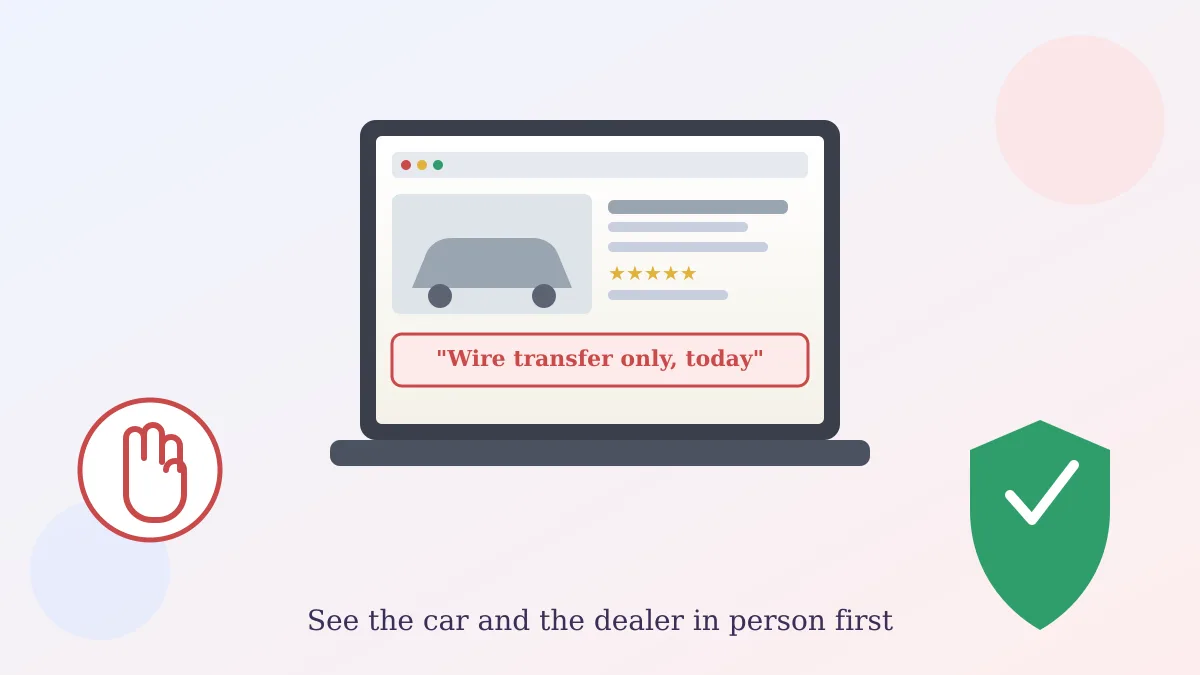
Say you've been hunting for a hard-to-find classic, maybe a '69 muscle car, and you finally find it: a dealership website with glowing reviews and the exact model, priced fair. You're ready to wire the deposit today. I almost fell for something similar with a "rare" boat listing a few years back, so when I heard about scammers spoofing car dealership websites, it hit close to home.
How can I tell whether a car dealership's website is real before I send money for a vehicle, especially one advertised as rare or hard to find?
The FTC put out a fresh warning about this in September: scammers are using AI to clone real dealership websites, copying the logo, the vehicle photos, and even the customer testimonials, right down to the last detail. Some victims show up expecting to drive off the lot, only to learn the dealership has no record of their order or their payment.
The one thing to do before you pay anything
Ask to see the car, and the dealership, in person. If they stall or make excuses, that's your answer. Too far to visit? Ask to hire an independent mobile inspection service to check the vehicle out before you send a dime. A real dealer will work with you on that. A scammer will suddenly go quiet.
Why the reviews don't help you here
Normally I'd say check the reviews. But because these sites impersonate an actual dealership, you might find real, glowing reviews for the business they're copying. Searching the dealer's name alongside "scam," "review," or "complaint" is still worth doing, but don't stop there since a clean search doesn't guarantee a clean deal.
The tell that matters most
If the "dealer" insists you pay by wire transfer only, and won't take a credit card or work through an escrow-style service tied to the actual sale, walk away. Wire transfers are hard to trace and nearly impossible to get back once they're sent, which is exactly why scammers push for them.
The rare-car bait
These fake sites often dangle something specific, a rare muscle car, a hard-to-find classic, because it makes buyers move faster and skip the usual caution. It's the same urgency trick behind bill-pay impersonator ads that show up at the top of a search result: make the deal feel too good and too time-sensitive to double-check.
If you already sent money
Report it right away at ReportFraud.ftc.gov, and if you paid by wire, call your bank immediately to ask about a recall. It's worth reading up on refund recovery scams too, since scammers sometimes circle back pretending they can get your money returned for a fee.
One thing worth remembering
A real dealership never minds a buyer double-checking. If yours does, that's not a strict business, that's a red flag with a logo on it.
Sources
- Federal Trade Commission: Scammers are spoofing car dealership websites: What you need to know
- CBT News: FTC warns car buyers about fake dealership websites and payment scams