Say you're helping your daughter find an apartment across the country, and you spot a listing with great photos, a fair price, and a real address. You email about it, and someone writes back fast, friendly, ready to send a lease. Here's the catch: that listing might be completely real, while the person answering your email has nothing to do with it.
How do scammers take over a real rental listing?
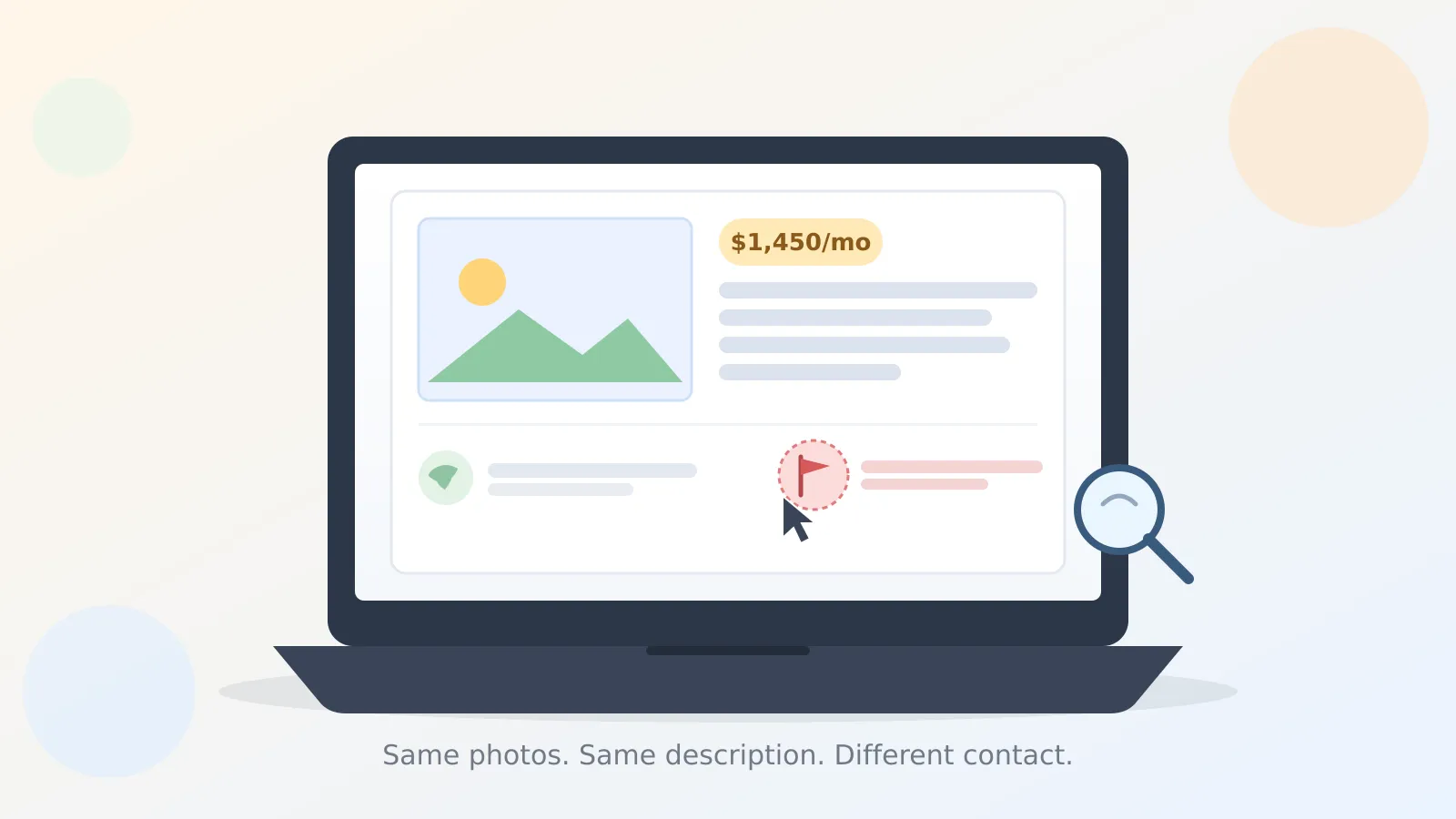
This is exactly how scammers hijacking real rental listings pull it off. They copy the photos, floor plan, and description straight from a genuine, currently available rental, then repost that same ad on a different site with their own phone number or email swapped in. The apartment is real. The listing agent you think you're reaching isn't.
The one search to run before you send anything
Before you reply to any rental ad, or the moment someone responds, copy the property's exact address and paste it into a search engine along with words like "apartment" or "for rent." If other listings pop up for that same address under a different landlord or property management company name, that's your answer.
Then go a step further: find that legitimate company's own website directly (not through a link the emailer sent you) and see if the unit is actually listed there, at a similar price. If it isn't, or the contact info doesn't match, walk away.
Why this scam is so convincing
Normally we're taught to be suspicious of blurry photos or prices that seem too good. This scam skips that red flag, since the pictures and description are lifted from a real listing. The only fake part is who answers, which is why careful people still get fooled.
Watch for these pressure tactics
Scammers often say they're out of state and can't show the unit in person, then ask for a deposit before you ever see it. A "landlord" who refuses any video call, and pushes for payment by wire transfer, gift card, or a payment app to a personal account, is showing you exactly what this is.
What if I already sent money or personal information?
Contact your bank right away, since some transfers can still be reversed if you act quickly. Report it to the FTC at ReportFraud.ftc.gov and to whatever site hosted the fake ad. If you shared a Social Security number, watch your accounts closely afterward, the same way we've discussed with other account takeover scams.
A couple of habits worth keeping
- Never wire money, send gift cards, or pay through a personal payment app for a deposit on a place you haven't seen or verified.
- Ask for a live video walkthrough if an in-person visit isn't possible; a real landlord can usually manage this.
- Run the same "search the address" check you'd use before trusting any ad on social media.
One thing I learned testing this myself: searching just the street number turns up too many unrelated results, but adding the unit number narrows it down fast and makes duplicate listings easy to spot.
If you do lose money this way, recovery calls promising to get it back are sometimes a second scam layered on the first, so verify anyone offering to help.
So take your time with any rental you find online: a real address doesn't mean a real landlord is on the other end of that email, and one quick search can tell you which one you're dealing with.
Sources
- Federal Trade Commission Consumer Advice: Rental Listing Scams
- South Carolina Department of Consumer Affairs: Rental Scams