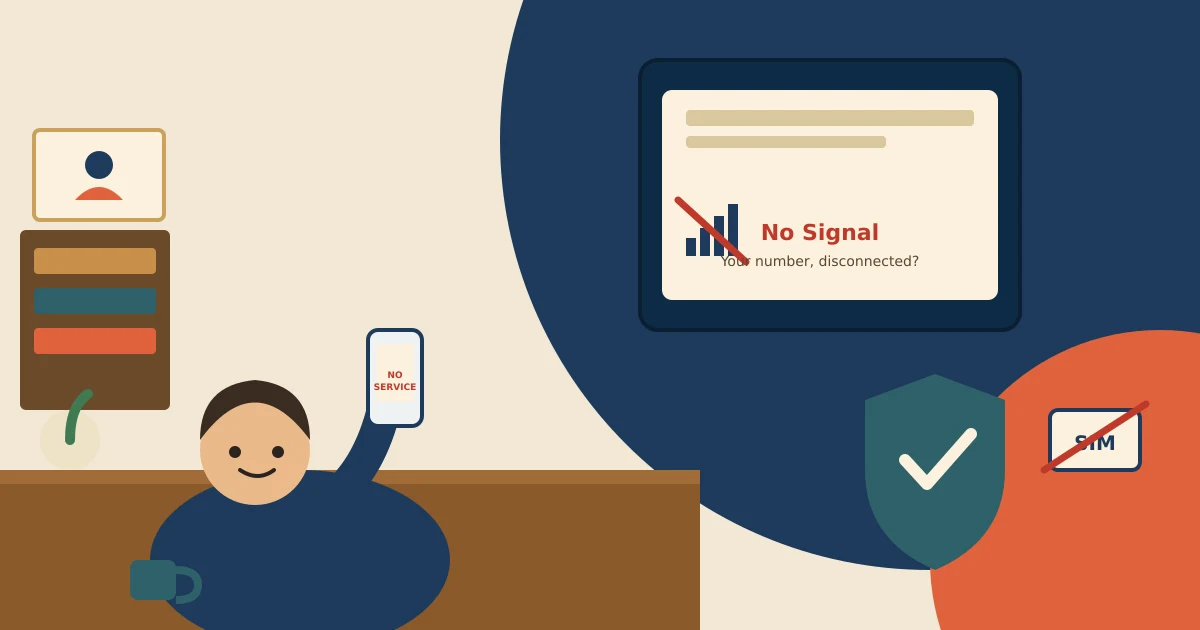
Say you're mid-morning, coffee in hand, and you notice your phone hasn't buzzed in a while. You check it: no bars, no Wi-Fi calling fallback, nothing. Calls won't go through, texts won't send. You'd probably think "dead zone" and shrug it off. But total, sudden loss of signal with no storm, no bill problem, and no travel involved is also the first sign of two related scams: phone number port-out and SIM swap fraud.
What port-out and SIM swap fraud actually are
Both tricks end the same way: your phone number moves to a device you don't control. A "port-out" is when a scammer, armed with enough of your personal details, convinces a different carrier to take over your number. A "SIM swap" (the SIM card is that tiny chip that ties your phone to your number) is when they convince your own carrier to move your number onto a new SIM they hold. Either way, your phone goes silent, and their phone starts ringing with your calls and texts.
Why scammers even bother
Your phone number is often the backup key to everything else. Banks and email providers text you a one-time code to prove it's really you. If a scammer already has your password from some other leak, that text code is the last lock standing between them and your account. Steal the number, and they can catch that code themselves.
The one thing to do first
Here's the practical step, and speed matters: the moment your phone shows no signal with no obvious cause, borrow another phone and call your carrier right away, using the number on their official website, not one from a text or email. Ask directly whether your line was ported or swapped. Carriers can often freeze or reverse a fraudulent transfer within the first hour or two.
Signs it's worth checking on, even before service drops
- A text arrives out of nowhere confirming a SIM or number change you didn't request
- You get "Your carrier account was updated" emails you didn't trigger
- Login attempts or password-reset notices show up in your email around the same time
The Federal Trade Commission and Federal Communications Commission both note that these scams often start with information gathered from social media, so the fewer full birthdates, hometowns, and pet names posted publicly, the better.
Make it harder to happen at all
Most major carriers let you add a PIN required for any account or SIM change, separate from your regular password. It's a five-minute call, and I only set mine up after a friend's number got hijacked. While you're at it, our guide on securing your Google Account before switching phones covers backup codes that work even without your number, and our 10-minute scam call setup pairs well with this.
If you already lost money
Report it at ReportFraud.ftc.gov and file with the FCC. If a scammer used the window to drain an account, our refund and recovery scam guide will help you avoid getting scammed a second time by a fake "recovery service."
Your phone number quietly protects more than you'd think, but one phone call, made fast and to the right number, is usually all it takes to shut this one down.
Sources
- Federal Communications Commission: Port-Out Fraud Targets Your Private Accounts
- Federal Trade Commission: SIM Swap Scams: How to Protect Yourself