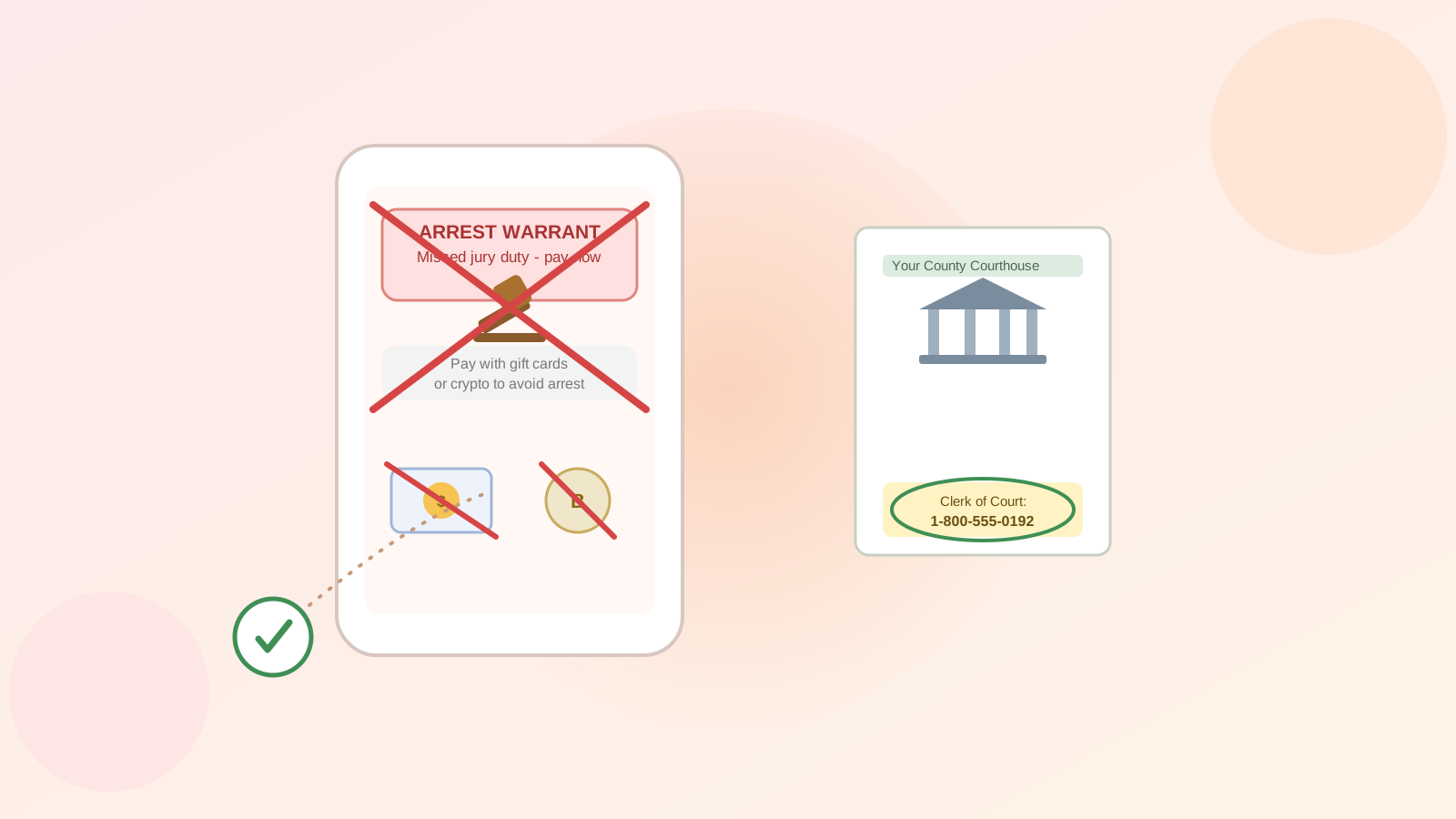
Say your phone rings, and the man on the line says he's a U.S. Marshal. You missed jury duty, he tells you, and there's a warrant out for your arrest unless you pay a fine right now. He already knows your name and your address. Your stomach drops. Here's the good news: that call is a scam, and a very common one.
The jury duty scam arrest warrant text call, explained
The Federal Trade Commission put out a consumer alert on exactly this pattern: someone calling and claiming to be a U.S. Marshal or local police officer, saying you missed jury duty and demanding a fine to avoid arrest. Real courts never work this way, and knowing that one fact defuses the whole thing.
The one thing to do first
Hang up the phone, or if it's a text or email, don't tap anything and don't reply. Then call your local federal or county courthouse directly, using a number you look up yourself, not one the caller gives you, and ask if there's really any notice on file for you. In almost every case, there isn't.
Real courts don't call, text, or email you like this
The U.S. Courts' own juror-scams page states it plainly: federal courts do not require sensitive information over the phone or by email, and real contact about jury service comes through the mail. Courts never demand payment over the phone.
Some versions of this scam even send a fake document, made to look like an official arrest warrant, as a text or email attachment. It looks official, with seals and legal-sounding language. It's still fabricated.
Why the caller already knows your name and address
This part throws people off, but it's not proof of anything. Names and addresses show up in data breaches that scammers buy in bulk, the same way a spoofed caller ID showing a familiar name isn't proof of who's really calling.
The payment demand is the biggest giveaway
Scammers pushing this scheme almost always insist you pay using a payment app, gift cards, or cryptocurrency, and they want it immediately, often while you're still on the phone. No government agency, court, or law enforcement office accepts payment that way, which is the exact same red flag behind utility company shutoff scams that demand instant payment.
A couple of habits worth keeping
- Save the real number for your local courthouse's Clerk of Court now, so you're never scrambling to find it during a scary call.
- If you ever get an official-looking jury notice by mail that feels off, call the courthouse to confirm before responding to anything.
- Never let urgency rush your decision. A real legal matter always gives you time and a paper trail, not a countdown clock.
Here's one detail worth knowing: those fake warrant documents usually get small things wrong, like a court seal that doesn't match your county, so a slow, careful look often gives the scam away on its own.
If you already paid or shared personal information, contact your bank right away, since some payment methods can still be stopped if you act quickly. You can also report it to the FTC at ReportFraud.ftc.gov. And if someone later calls promising to get your lost money back for a fee, our guide on recovery scams that follow an initial loss is worth a read too.
So take a breath if this ever happens to you: real jury duty never comes with a same-day arrest threat, and hanging up costs you nothing.
Official sources
- Federal Trade Commission Consumer Alert: Ignore calls, texts, and emails threatening to arrest you for missing jury duty
- United States Courts: Juror Scams