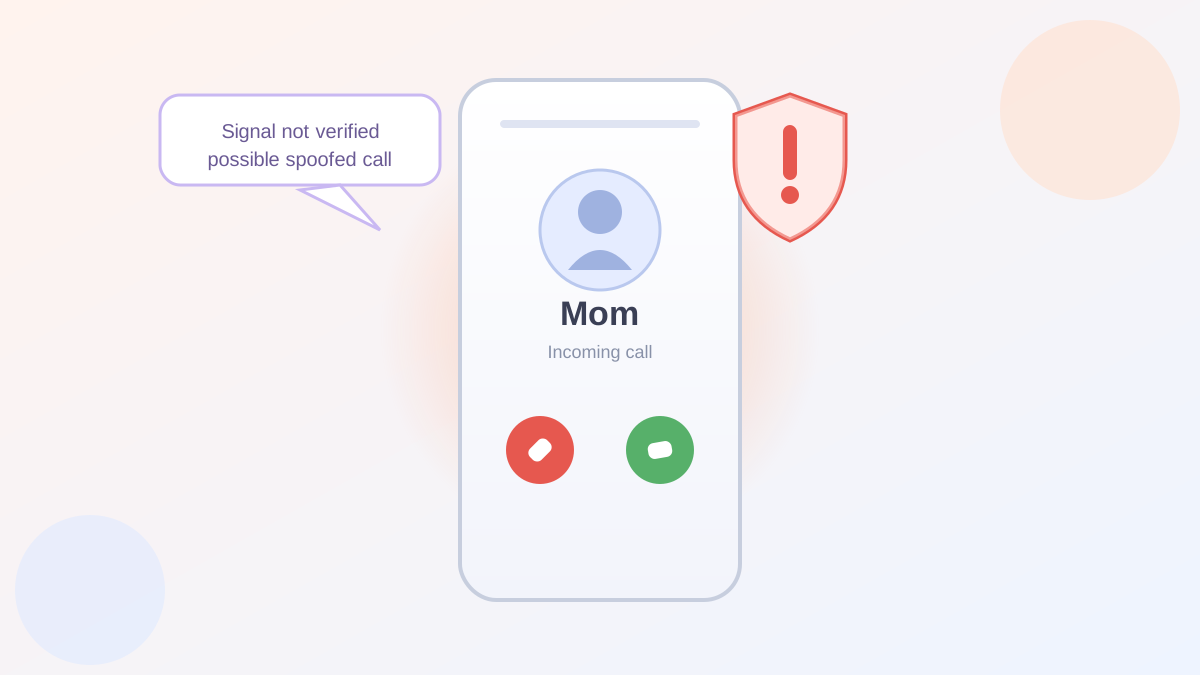
Say your phone rings and the screen says "Mom." You answer, and it really does sound like her — same voice, same little laugh. Except it isn't her at all. It's a scammer using an AI tool to clone her voice, calling from a number your phone thinks is hers.
I only found out about this myself last week: Android now has a feature built specifically to catch that exact trick.
What is Android's new "fake call detection" feature?
Google calls it fake call detection, and it's part of Phone by Google, the calling app that comes preinstalled on Pixel and many Android phones. It works quietly in the background, and it's meant to catch impersonation scams where a caller ID shows a real contact's name, but the person on the other end isn't actually them.
The one setup step that matters most
Here's the important part, so let's get it out of the way early: this only works if both you and the contact being spoofed are using Phone by Google, along with the Contacts and Google Messages apps. Open the Google Play Store, check that all three are installed and set as your defaults, and gently ask family members to do the same. Without that shared setup on both ends, there's nothing to detect.
How does it know when someone is spoofing a contact's number?
When your phone and a contact's phone are both running Phone by Google, they can exchange an encrypted signal that confirms a call really is coming from that person's device. If a call claims to be from your contact but that signal doesn't check out, your phone flags it as a suspected spoofed call before you even answer.
This builds on a feature Google rolled out earlier for verified financial calls, which warns you if someone is pretending to be your bank. Fake call detection expands that same idea to your personal contacts — the people scammers most love to impersonate, because a call from "Mom" or "your grandson" lowers your guard instantly.
Why this matters more than it used to
Voice-cloning tools have gotten good enough that a scammer only needs a short clip of someone's voice, sometimes pulled from a public video, to fake it convincingly. Impersonation scams are already among the most reported frauds to the FTC, with billions in losses tracked in recent years. A caller ID showing a familiar name used to feel like proof. It isn't anymore.
What it can and can't do for you
It works on any phone running Android 12 or newer, but only for calls between two people both using Google's apps — it won't flag a spoofed call from someone using a different phone or dialer, and it isn't a replacement for a family verification habit. Our guide on verifying an AI voice family emergency call covers the hang-up-and-call-back routine worth keeping regardless.
It's also worth pairing with basics like the free filters in our 10-minute scam-call phone setup, and knowing how caller ID spoofing shows up elsewhere, like in the Social Security impersonation scam we've written about before.
The reassuring part
You don't have to become a tech detective to benefit from this — install the three apps, encourage close family to do the same, and let your phone quietly do the checking in the background.