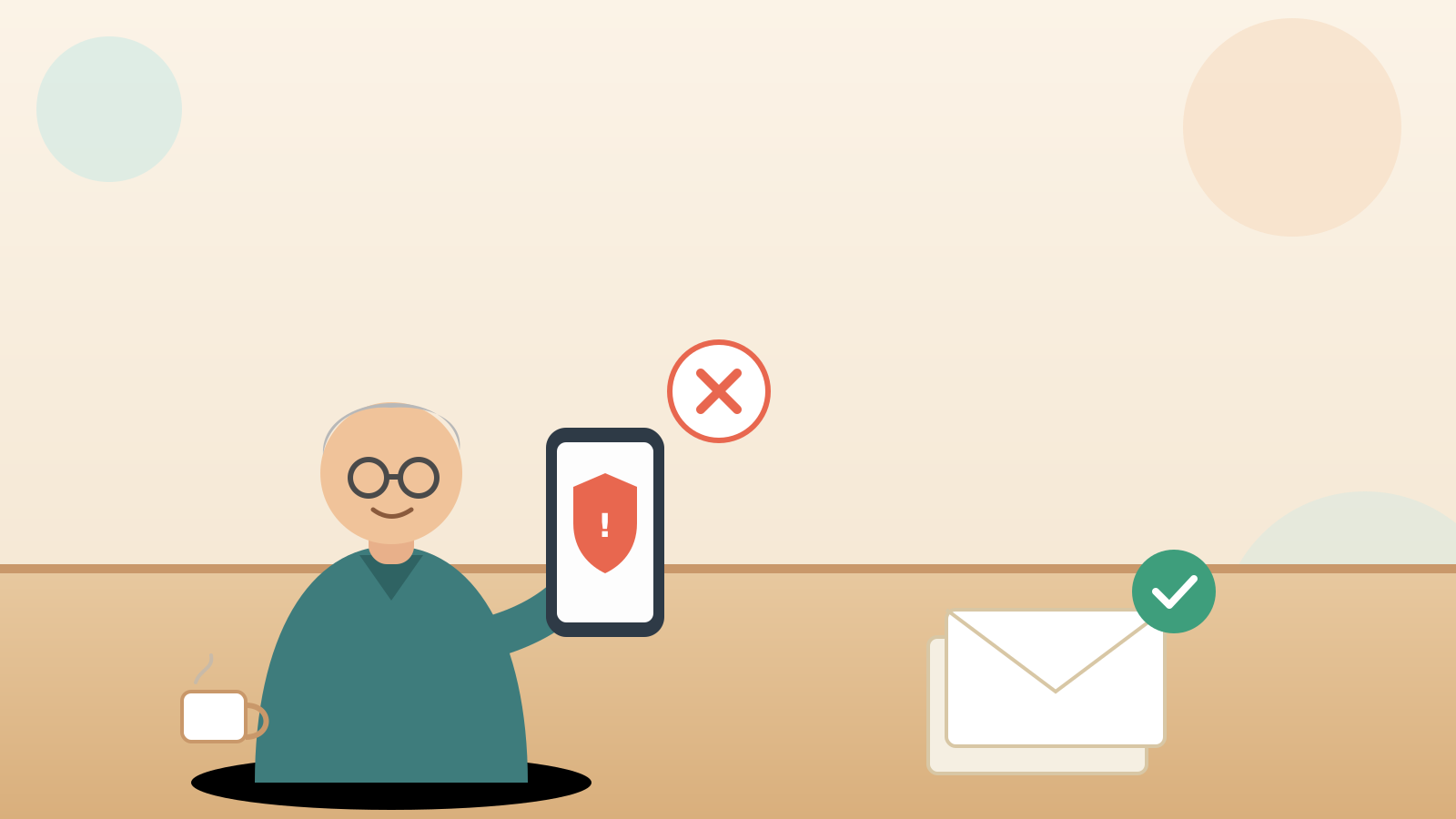
Say your phone rings and a friendly voice says she's calling about your Medicare plan, maybe even mentioning your state or a benefit you actually have. She wants to "lock in" your coverage before Open Enrollment fills up, and just needs your Medicare number to get started. Feels routine enough — except it's almost certainly not real.
How can I tell a legitimate Medicare Open Enrollment call or mailer from a scammer pretending to be Medicare or an insurance agent, before enrollment opens October 15?
Here's the one thing worth remembering before October 15: real Medicare representatives never call, text, or email you out of the blue asking for your Medicare, bank, or Social Security number. If you didn't call them first, hang up. That's the whole trick scammers rely on — most people don't know that rule until they've already heard a convincing voice on the line.
Why this shows up every single fall
Open Enrollment runs October 15 through December 7, and the FTC says scammers ramp up right alongside it. They call pretending to be Medicare or a plan agent, claim you need a "new" or "updated" card, and ask for numbers to send it. Real Medicare cards are free and mailed automatically — nobody legitimate needs to verify anything to send you one.
Caller ID can lie to you
The FCC's own guidance on these calls points out that scammers can spoof caller ID, making a call look like it's really coming from Medicare or a number you recognize. So seeing "Medicare" pop up on your screen proves nothing. If something about a call feels off, this is the same spoofing trick behind the fake Social Security Administration calls making the rounds — don't trust the name on the screen either way.
What a real conversation actually sounds like
If you called Medicare yourself, or a State Health Insurance Assistance Program (SHIP) counselor you reached out to, they'll answer your questions without pressuring you to decide on the spot. Medicare will only ask you to verify information if you contacted them first — never the reverse.
A few signs it's a scam, not a courtesy call
- Pressure to enroll or "confirm" your plan right now, before you hang up
- A request for your Medicare, bank, or credit card number to process anything
- Someone claiming to represent Medicare itself — real Medicare doesn't sell or push plans by phone
That pressure-to-act-immediately pattern is the same one we've seen in the Veterans Savings Program postcard scam — a deadline that conveniently disappears the moment you hang up and think it over.
If a call like this gets through anyway
Hang up, then call 1-800-MEDICARE (1-800-633-4227) yourself to check. For comparing plans honestly, your local SHIP counselor at shiphelp.org is free and has no plan to sell you. Report the call at ReportFraud.ftc.gov.
Cutting down on these calls year-round
One tested detail: when I checked my own phone's "Silence Unknown Callers" setting while researching this, it didn't stop scam texts — only calls. Pairing it with your carrier's free spam-blocking app closed that gap. Our 10-minute scam call setup guide covers both, free, on iPhone and Android.
Either way, take a breath: no real Medicare business needs an answer from you in the next five minutes, so hanging up and calling back on your own terms is always the safe move.
Sources
- Federal Trade Commission: This Medicare Open Enrollment season, learn how to protect yourself from scams
- Federal Communications Commission: Older Americans and Medicare Call Scams