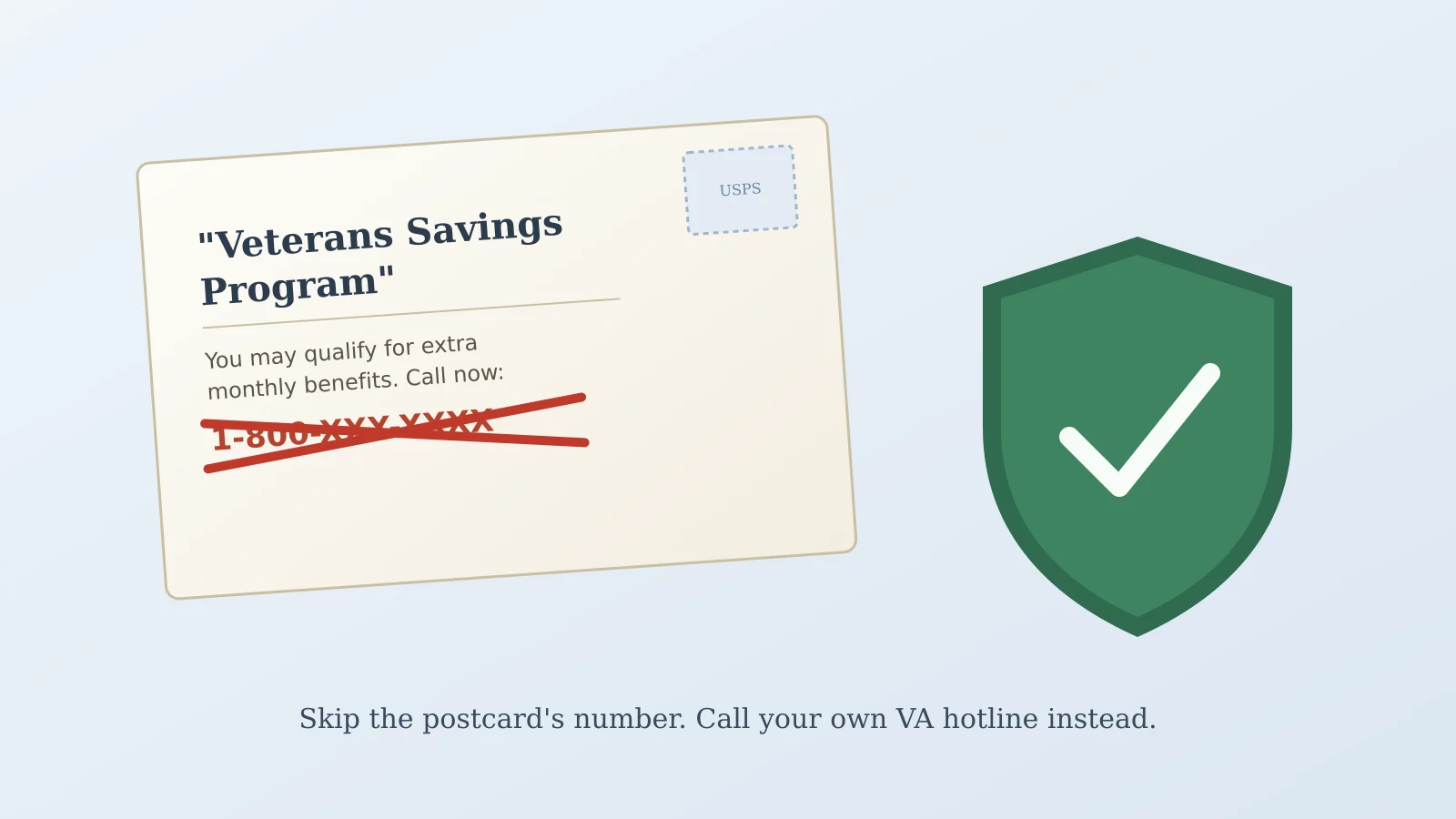
Say a postcard shows up in your mailbox, official-looking, mentioning your state and maybe even a real VA benefit like CHAMPVA or TRICARE For Life. It says you or your spouse could qualify for extra monthly money through a "Veterans Savings Program," and you need to call within days or miss out. My neighbor, a Navy vet, got one just like it last week and almost called before checking with me first.
How can I tell whether a postcard offering extra monthly VA benefits or dental coverage is real, and what should I do instead of calling the number printed on it?
Here's the short version: there is no "Veterans Savings Program." The Department of Veterans Affairs itself says it doesn't exist. Scammers made up the name and are mailing postcards nationwide to make it sound like a real government offer.
The one thing to do first
Don't call the number on the postcard. Ever. If you want to check on your actual VA benefits, call the VA Benefits Hotline yourself at 1-800-827-1000, a number you look up independently, not one printed on something that landed in your mailbox uninvited.
Why the postcard feels so convincing
It's not just a vague promise of money. The mailer often lists your actual state and name-drops real programs like CHAMPVA or TRICARE For Life, details that make it feel official even though the "savings program" itself is invented.
The pressure is the tell
The postcard tells you to call right away or risk losing the benefit. That urgency is the giveaway. Real VA communications don't threaten you with a deadline to act now, and they never ask you to hand over your Social Security number or bank account details over the phone to "confirm" anything.
The same trick, different mailbox
This is the mail version of a pattern we've seen play out by text and phone before. It's the same urgency used in the Social Security impersonation scam and the unpaid toll text scam: manufacture a problem or a prize, then rush you before you can think it through or ask someone else.
If you've already called or shared information
Contact the VA fraud team at VSAFE.gov or 1-833-38V-SAFE, and file a report with the FTC at ReportFraud.ftc.gov. The sooner you report it, the sooner they can warn others in your area. It's worth mentioning to family too, the same way we'd flag a tax debt relief scam promising to erase debt "for pennies on the dollar."
What to do with the postcard itself
Toss it, or better, hang onto it just long enough to report the details. You don't owe scammers a callback, and legitimate VA benefits never come with a countdown clock.
So if one of these shows up in your mail, take a breath. No real benefit disappears because you didn't call back today, and your own VA hotline number is always the safer place to check.
Sources
- Federal Trade Commission: How to spot a postcard scam targeting veterans
- U.S. Department of Veterans Affairs: Fraud alert: Beware the "Veterans Savings Program" postcard scam