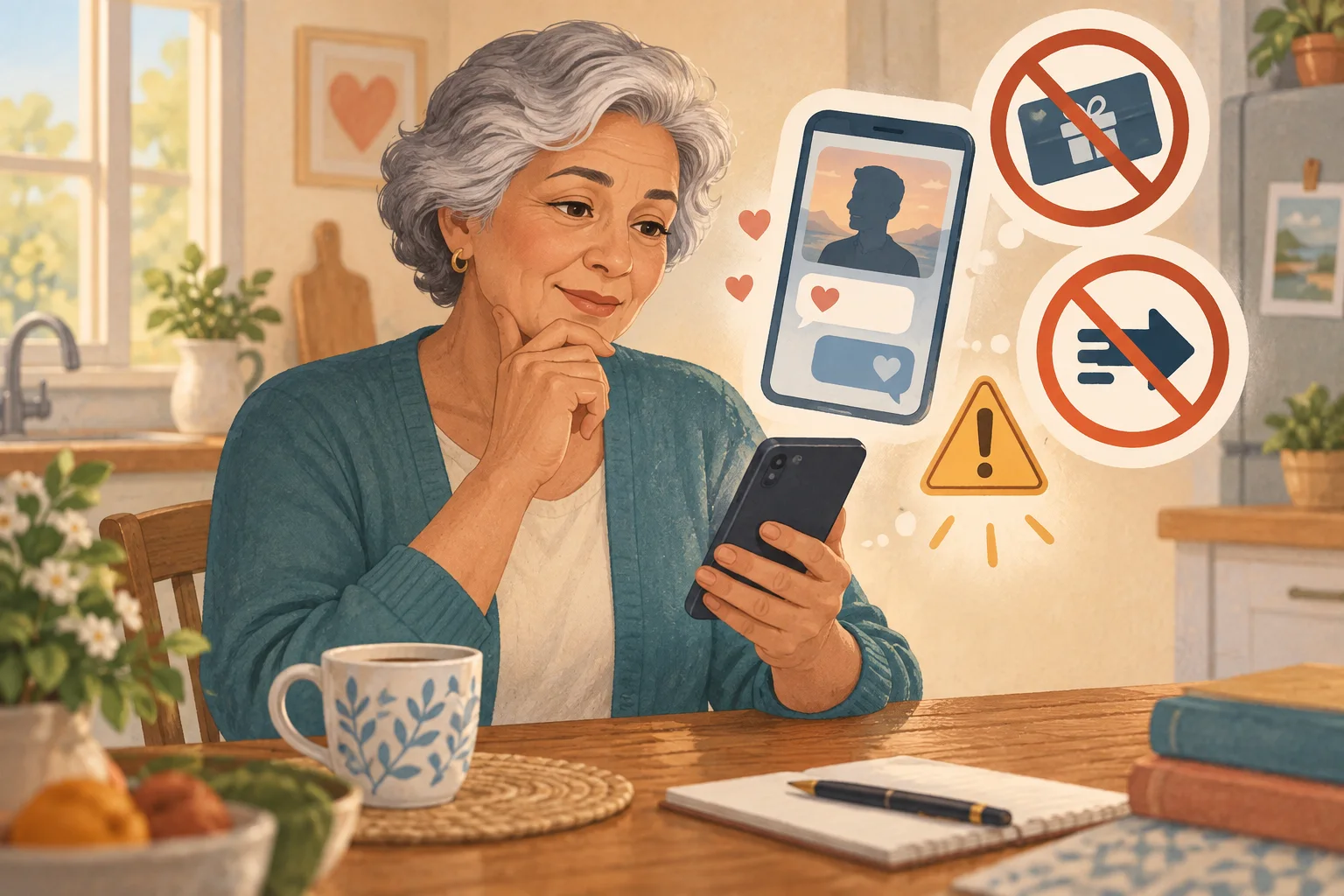
Say someone you met online starts sending a cheerful good-morning message every day. They remember your stories, say all the right things, and talk about meeting soon—but something always gets in the way. If you're checking online romance scam red flags before sending money, pay attention to what they do, not how caring the messages sound.
The safest rule comes before the detective work
Never send money or gifts to a romantic interest you have not met in person. That is the Federal Trade Commission's clearest advice, and it still applies when the request sounds small, urgent, or temporary.
Do not pay for a plane ticket, medical emergency, visa fee, phone bill, or investment. Gift cards, cryptocurrency, wire transfers, and payment apps are favorites because the money can be difficult to recover.
Three red flags that often travel together
First, the relationship moves unusually fast. A scammer may talk about love or a future together long before two people have had time to know each other.
Second, they want to leave the dating site for text, WhatsApp, Telegram, or email. Homeland Security Investigations says that can help a scammer avoid the dating platform's detection tools.
Third, every meeting or clear video call falls apart. Overseas work, military service, an oil rig, a broken camera, or another sudden crisis keeps them safely out of view.
One excuse is not proof. A repeating pattern—quick affection, private chats, no meeting, then money—is what should make you stop.
Check the profile without confronting the person
Save the profile photo and run a reverse image search, which checks whether the same picture appears elsewhere online. Search the person's claimed job plus “scammer,” too; the FTC gives “oil rig scammer” and “US Army scammer” as examples.
Here is the limitation worth remembering: no search match does not prove the person is real. A newly posted, cropped, or AI-made picture may not appear in results. Treat the search as one clue, not a background check.
Our guide to checking a suspicious profile photo in an online pet ad explains the same reverse-image habit. And if the first contact came through a promoted post, see how to check social media ads before trusting them.
If you already sent money
Stop communicating and call your bank, card issuer, gift-card company, or payment app immediately. Say plainly that you paid a scammer and ask whether the transaction can be reversed.
Report the profile to the dating or social platform and file a report at ReportFraud.ftc.gov. Then watch for anyone offering to recover the money for an upfront fee; our refund and recovery scam guide covers that painful second trick.
There is no shame in being trusting—just pause before money enters the conversation.
Official sources
- Federal Trade Commission: What To Know About Romance Scams
- Homeland Security Investigations: Protect Yourself Against Romance Scams