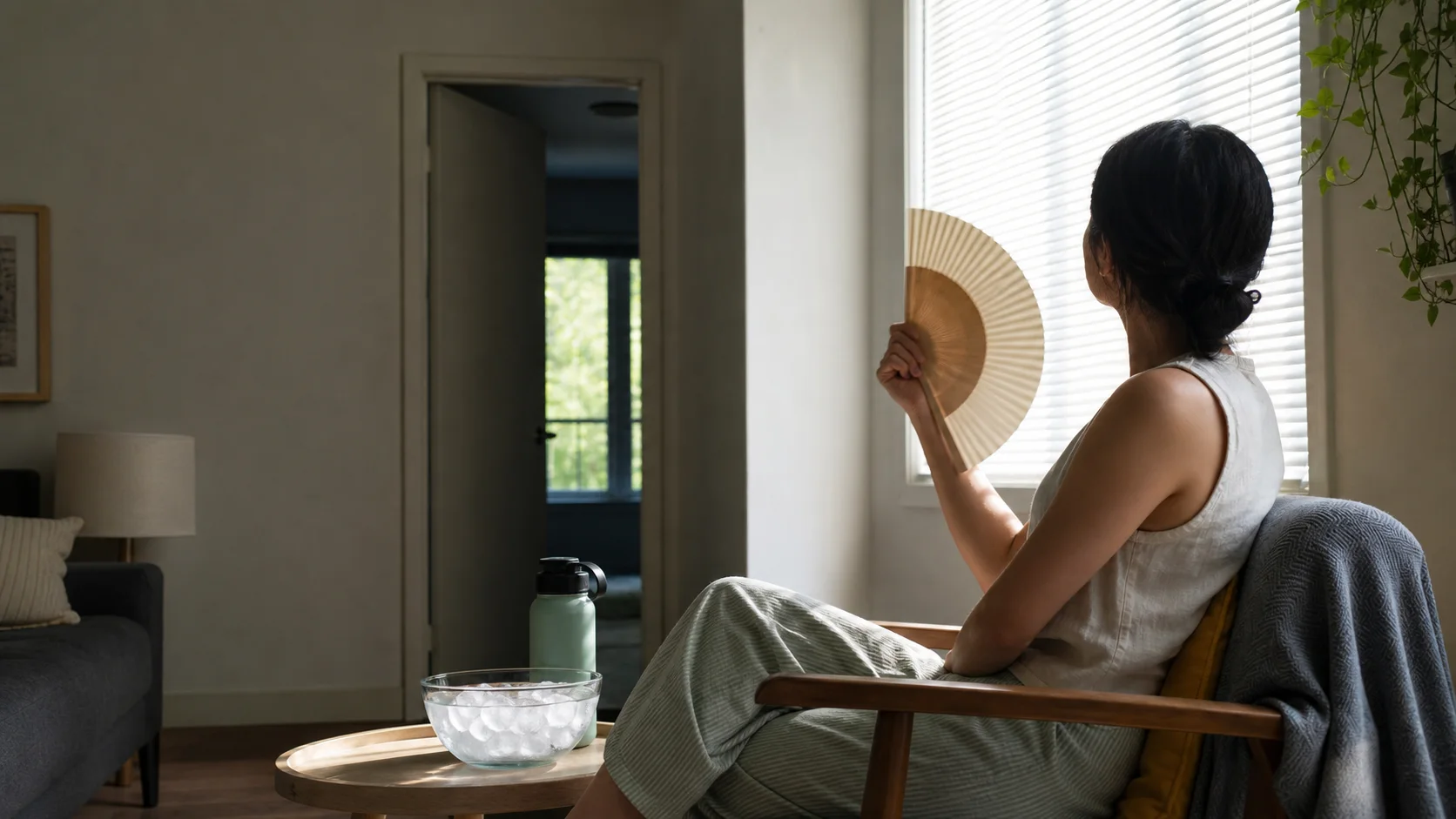
If you need to stay cool without air conditioning during a heat wave, reduce the heat getting into your home, drink water regularly, avoid the hottest part of the day, and make a specific plan to spend time in an air-conditioned public building. A fan can feel helpful, but it is not a substitute for a cool place when heat is dangerous. Check your local forecast and heat alerts first; the right plan changes when the temperature and overnight lows stay high.
Start with the heat alert, not the thermostat
A hot home is more concerning when a heat advisory or excessive-heat warning is in effect, especially if hot conditions last for several days. Your local National Weather Service forecast tells you when the peak heat is expected and whether nighttime temperatures will provide relief. The National Weather Service heat-safety guidance also explains why people who do not have air conditioning can be more vulnerable during prolonged heat.
What is known: a shaded, closed-up home can be more comfortable than one taking in direct sun, and an air-conditioned building gives your body a real break from the heat. What is not knowable from a national checklist is whether your own home will remain safe through the afternoon or overnight. Do not wait until you feel sick to choose a cooler place.
For the big-picture alert plan, start with what to do during a heat dome. It helps distinguish a broad heat headline from the local timing and warnings that should guide your day.
Keep additional heat out of the home
In the morning, close blinds, curtains, or shades on windows that receive direct sunlight. Keep exterior doors closed as much as possible. Move routine chores that create heat—baking, using an oven, running a dryer, or a long hot shower—to a cooler time, or skip them until the heat passes.
If the air outdoors becomes cooler than your indoor air later in the evening, opening windows may help. But that is not a rule to follow blindly: close them again when the outdoor air warms, and keep windows secured. If your area has wildfire smoke, poor-air-quality guidance, or another reason to keep windows shut, follow local official instructions instead.
Wear loose, lightweight clothing and use cool showers or baths if you can do so safely. A damp cloth on the neck can feel refreshing. These measures can make a room more tolerable, but they do not replace leaving for a cooler location during dangerous conditions.
Use a fan as comfort, not as your only plan
A portable fan moves air and can make a person feel better, but it does not cool the room. Ready.gov specifically advises people not to rely on a fan as their primary cooling device because it does not reduce body temperature or prevent heat-related illness. Its official heat guidance recommends spending time in air-conditioned buildings during extreme heat.
That does not mean you must sit still without one. Use a fan as one small comfort measure while you lower sun exposure, sip water, and arrange a cool-place break. Keep it clear of wet surfaces and cords; never use damaged electrical equipment. If the room feels oppressive despite these steps, treat that as a reason to leave, not a problem to solve with another fan.
Plan an air-conditioned break before the worst hours
The most practical answer to a dangerously hot home is often a few hours somewhere air conditioned. Consider a public library, community center, mall, or a trusted friend’s home. During an active heat event, a city or county may open a dedicated cooling center.
Our guide to finding a cooling center near you explains how to locate one through local government pages, public-health alerts, libraries, and 211. Confirm today’s hours, entry rules, transportation, and whether the location is actually operating as a cooling site before you go. Save one backup location too.
Bring water, essential medications, a charged phone, and anything a child or dependent needs. If the trip requires a long walk or waiting outdoors, go earlier in the day when possible, or ask a neighbor, friend, or local service about a ride. For people who live alone, a scheduled check-in is a sensible part of the plan.
Make hydration and activity changes that fit the day
Keep water within reach and drink regularly rather than waiting to feel very thirsty. Alcohol can worsen dehydration, so save it for a cooler day. Eat simple meals that do not require heating the kitchen, and postpone strenuous errands, yard work, or exercise until conditions improve.
There is no single water number that suits every person or every heat event. Age, activity, diet, medications, and medical conditions all affect what is appropriate. Our daily water guide covers ordinary hydration habits; during a heat alert, follow any extra guidance from your health-care team and your local authorities rather than trying to compensate with an extreme amount at once.
Check on people who may have a harder time cooling down: older adults, young children, people who work outdoors, and neighbors without transportation or air conditioning. A quick call can uncover a simple need, such as a ride to a cool building or help finding today’s hours.
Know when the heat requires urgent action
Move to a cooler place and rest if you notice heavy sweating, weakness, dizziness, nausea, headache, or muscle cramps. Cool down and get help if symptoms worsen or do not improve. Confusion, fainting, seizures, or loss of consciousness can be signs of heat stroke. Call 911 immediately, move the person to a cooler area if possible, and begin cooling them while help is on the way. Do not give fluids to someone who is confused or unconscious.
For a clearer comparison of warning signs, read heat exhaustion vs. heat stroke. It is useful to look at this before a hot day, when you can make decisions calmly.
Your next step
Open your local forecast now and note the hottest hours. Close the sunny blinds, fill a bottle of water, and choose one air-conditioned place you can reach today, plus a backup. If the heat alert intensifies or your home remains uncomfortably hot, go to that cool place early rather than trying to ride out the entire afternoon indoors.