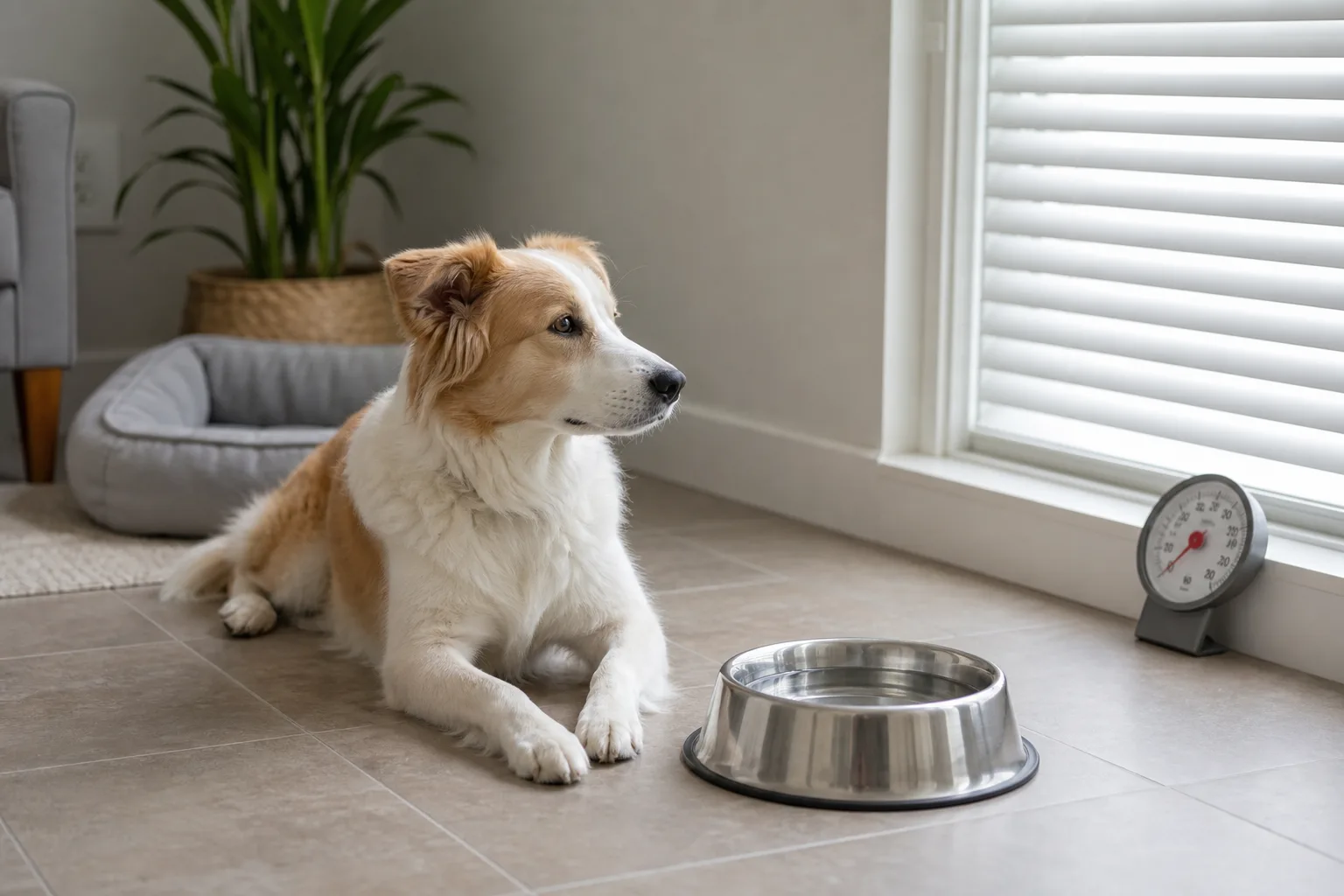
To keep a dog or cat safe during extreme heat, give them a cool indoor place, fresh water, and a quieter routine until conditions improve. Walk dogs during cooler hours, protect paws from hot pavement, and never leave any pet in a parked car. If a pet is panting heavily, struggling to breathe, weak, vomiting, collapsing, or acting unusually, move them out of the heat and call a veterinarian or emergency clinic promptly.
Begin with today’s heat conditions
“Hot” is not one fixed number. Sun, humidity, pavement, shade, airflow, and how long the heat lasts all change the risk for an animal. Start by checking your local forecast and alerts, not just the temperature you remember from the morning. The National Weather Service heat-safety page explains how heat index combines heat and humidity and why conditions can remain stressful after sunset.
On an extreme-heat day, the simplest plan is to reduce outdoor time. Let pets use a shaded yard only for a short, supervised break, then bring them back inside. Cats that usually roam outdoors are safer indoors while the heat is intense. Close blinds on sunny windows, make sure the room has airflow or air conditioning, and check the space your pet actually chooses—not only the thermostat in another room.
For the household side of the plan, our guide to staying cool without air conditioning during a heat wave can help you identify a cooler indoor option early. If your home is becoming too hot for people, it is not a comfortable place to leave a pet for the day either.
Set up a cool, easy-to-reach indoor base
Choose a quiet room with a cooler floor, shade, and access to water. Keep bedding away from direct sun and avoid shutting a pet in a stuffy porch, garage, shed, or laundry area. A pet should be able to move away from a window or a warm appliance; a crate or carrier should not become the only place they can rest.
Put out clean water in a stable bowl and refresh it regularly. If you have more than one pet, use more than one bowl so a shy animal is not blocked by another pet. The American Veterinary Medical Association’s summer pet-safety guidance recommends ensuring pets have plenty of fresh water and a cool, shaded place during hot weather.
Do not assume a fan alone solves the problem. It may make the room feel better, but it does not create a reliably cool refuge in dangerous heat. Skip improvised cooling methods that could create a choking, electrical, or slipping hazard. When a pet has a medical condition, is very young or older, or has a short muzzle or heavy coat, ask its regular veterinarian what heat plan fits that animal before the next heat event.
Make dog walks shorter and cooler
Move walks and active play to the coolest available part of the day, usually early morning or later evening. Choose shade where possible, carry water for a longer outing, and keep the pace easy. A short sniff-and-toilet trip is often enough during an alert; a hard run, long hike, or game of fetch can wait.
Pavement, artificial turf, sand, and metal surfaces can get much hotter than the air. Before heading out, press the back of your hand on the walking surface for several seconds. If it feels uncomfortably hot to your skin, use grass or a shaded route instead, or postpone the walk. This is a practical check, not a medical test, so watch your dog too: reluctance to walk, frequent stopping, or lifting paws means it is time to get off the surface and go inside.
Bring your pet home before it looks tired. Heat can build during an outing, and a dog that wants to keep exploring may not stop at the first sign of discomfort. For a broader check of heat timing and local warnings, see what to do during a heat dome.
Parked cars are never a waiting room
Never leave a pet in a parked vehicle during warm weather, even for a short errand, with windows cracked, or in shade. The AVMA warns that a car’s interior can heat up quickly, and the conditions outside do not make a closed vehicle safe. If a pet cannot go inside with you, leave them at home or change the plan.
This rule applies to routine stops as well as trips. Set up errands so the pet is safely indoors before you leave. When traveling, plan pet-friendly stops, confirm the destination’s rules in advance, and keep water accessible. If your vehicle breaks down in heat, prioritize getting people and pets to a cooler, safe location and contact roadside assistance or local help rather than waiting in the vehicle.
Know the warning signs and get veterinary help
Prevention is better than trying to treat overheating at home. The AVMA lists warning signs of heat-related illness in pets that include excessive panting or difficulty breathing, increased heart or respiratory rate, drooling, mild weakness or collapse, and seizures. Vomiting, diarrhea, or changes in behavior can also be concerning in a hot setting.
If you notice these signs, get the pet out of the heat, keep activity stopped, and call a veterinarian or emergency veterinary clinic right away for instructions. Tell them what you observed, how long the pet was exposed, and whether symptoms are improving or worsening. Do not wait for a pet to become unresponsive, and do not give human medication unless a veterinarian specifically directs you to do so. A general online checklist cannot assess the cause or severity for an individual animal.
If you are taking the pet to a clinic, call ahead when you can so the team can prepare. Bring only what is useful—such as the pet’s medication list—and keep the car cool during transport. Follow the clinic’s directions over any advice in this article.
A five-minute heat-day checklist
Before the hottest hours, check that your pet has:
- A cool indoor room with shade and room to move
- Fresh water in a clean, stable bowl
- A shortened, cooler-time plan for toilet breaks or walks
- No access to a parked car, hot patio, garage, or enclosed outdoor space
- Your regular veterinarian’s and nearest emergency clinic’s contact information
Then check on them again later in the day. The goal is not to make a summer routine perfect; it is to notice when the weather has changed enough to make a normal routine unsafe. Keep the day low-key, keep your pet close to a cool place, and call a veterinary professional early if something seems wrong.