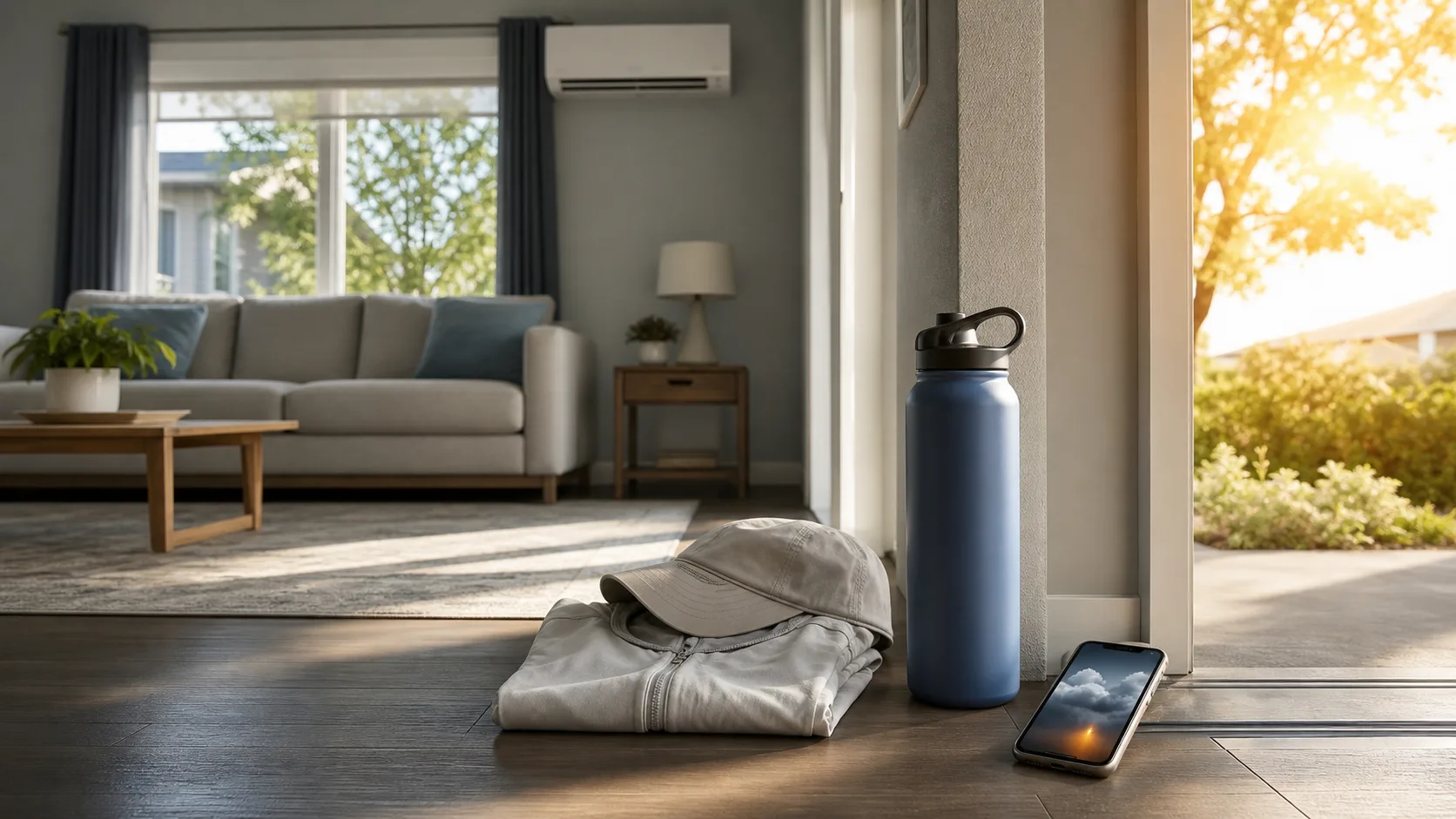
If you are asking what to do during a heat dome, treat it as a stretch of potentially dangerous heat that can last for days: check your local heat alert, make a plan to be in air conditioning during the hottest hours, cut back on strenuous outdoor activity, drink fluids regularly, and check on people who may not be able to stay cool. A heat dome is a weather pattern that traps hot air; it is not a separate type of emergency alert. The alert for your exact location—such as a heat advisory, excessive heat watch, or excessive heat warning—is what tells you how urgent conditions are.
Start with the forecast and your local heat alert
Open your local National Weather Service forecast and read the active alert, if there is one. It identifies the affected area, timing, and hazard. Heat risk can be high even when the temperature alone does not look extraordinary, because humidity, warm nights, and several hot days in a row make it harder for the body and home to cool down.
What is known: a heat dome can keep high temperatures in place over a broad area and can make a heat wave persist. What is not known from the phrase alone is the risk at your address, the hottest hours, or how long the most severe conditions will last. Those details come from local forecasts and alerts, which can change.
Turn on Wireless Emergency Alerts on your phone if you have disabled them, and use a weather app or local emergency-management notifications as a backup.
Make a cool-place plan before the afternoon heat
Air conditioning is the best protection during extreme heat. If your home does not have it, decide early where you can cool down: a library, community center, shopping center, cooling center, or a trusted friend or relative's home. Check opening hours and transportation before you need to leave. Local governments and emergency management offices often publish cooling-center information during prolonged heat.
At home, use shades or curtains to block direct sun, run fans only as a comfort aid, and avoid adding indoor heat with an oven, clothes dryer, or long cooking session during the warmest part of the day. A fan does not make extremely hot indoor air safe by itself; moving to an air-conditioned space is the better plan when the heat is severe.
Never leave a child, older adult, pet, or anyone else in a parked car. The temperature inside can climb quickly, even with a window cracked. If you see someone in immediate danger, call 911.
Change the day's schedule, not just your outfit
Move demanding outdoor tasks to a cooler time, postpone them, or break them into short sessions with shade and cooling breaks. If you must work or exercise outside, wear lightweight, loose-fitting clothing, a brimmed hat, and sunscreen. Bring water and take breaks before you feel worn out.
Alcohol can contribute to dehydration, and very cold drinks or a sports drink are not a substitute for a cooling plan. For everyday hydration habits, use our guide to how much water to drink each day; during extreme heat, local conditions and activity level can change what is practical. People who have been told to limit fluids should follow their clinician's instructions rather than a generic target.
If you are walking for fitness, choose early morning or evening and keep the outing shorter when an alert is active. The benefits in our guide to walking 30 minutes a day do not require exercising in the worst heat.
Check on the people most likely to be affected
During a multi-day heat event, a quick call or visit can matter. Older adults, infants and young children, people who work outdoors, people without reliable cooling, and people taking certain medications may have more difficulty coping with heat. Ask a specific question: “Do you have air conditioning or a cool place to go this afternoon?” Offer a ride, help find a cooling location, or arrange a check-in time.
Pets need a plan too. Keep water available, walk dogs during cooler hours, and avoid hot pavement, which can burn paws. Do not leave pets in vehicles.
Recognize when heat has become a health emergency
Heat exhaustion can bring heavy sweating, weakness, dizziness, nausea, headache, or muscle cramps. Move the person to a cooler place, loosen extra clothing, cool them with wet cloths or a cool bath, and offer sips of water if they are awake and able to drink. If symptoms worsen, last longer than an hour, or involve vomiting, get medical help.
Confusion, fainting, seizures, or loss of consciousness can signal heat stroke. Call 911 immediately and begin cooling while waiting for help. Do not give fluids to someone who is confused or unconscious. Our heat exhaustion vs. heat stroke guide explains the warning signs in more detail, but the safe rule is simple: when mental status changes in extreme heat, treat it as an emergency.
A short checklist for tonight and tomorrow
- Check tomorrow's local forecast and any heat alert before making outdoor plans.
- Set aside water, medications, chargers, and a way to receive alerts.
- Identify an air-conditioned place and how you will get there.
- Check that children, older neighbors, and pets have a cool place.
- Reschedule demanding outdoor work for a cooler time or another day.
The concrete next step is to look up your local forecast now and decide where you will spend the hottest hours tomorrow if your home becomes too warm. For official guidance, read Ready.gov's extreme-heat safety advice and the National Weather Service heat-safety guidance. A heat dome may be a broad weather story, but the right response is local, simple, and worth arranging before the day heats up.