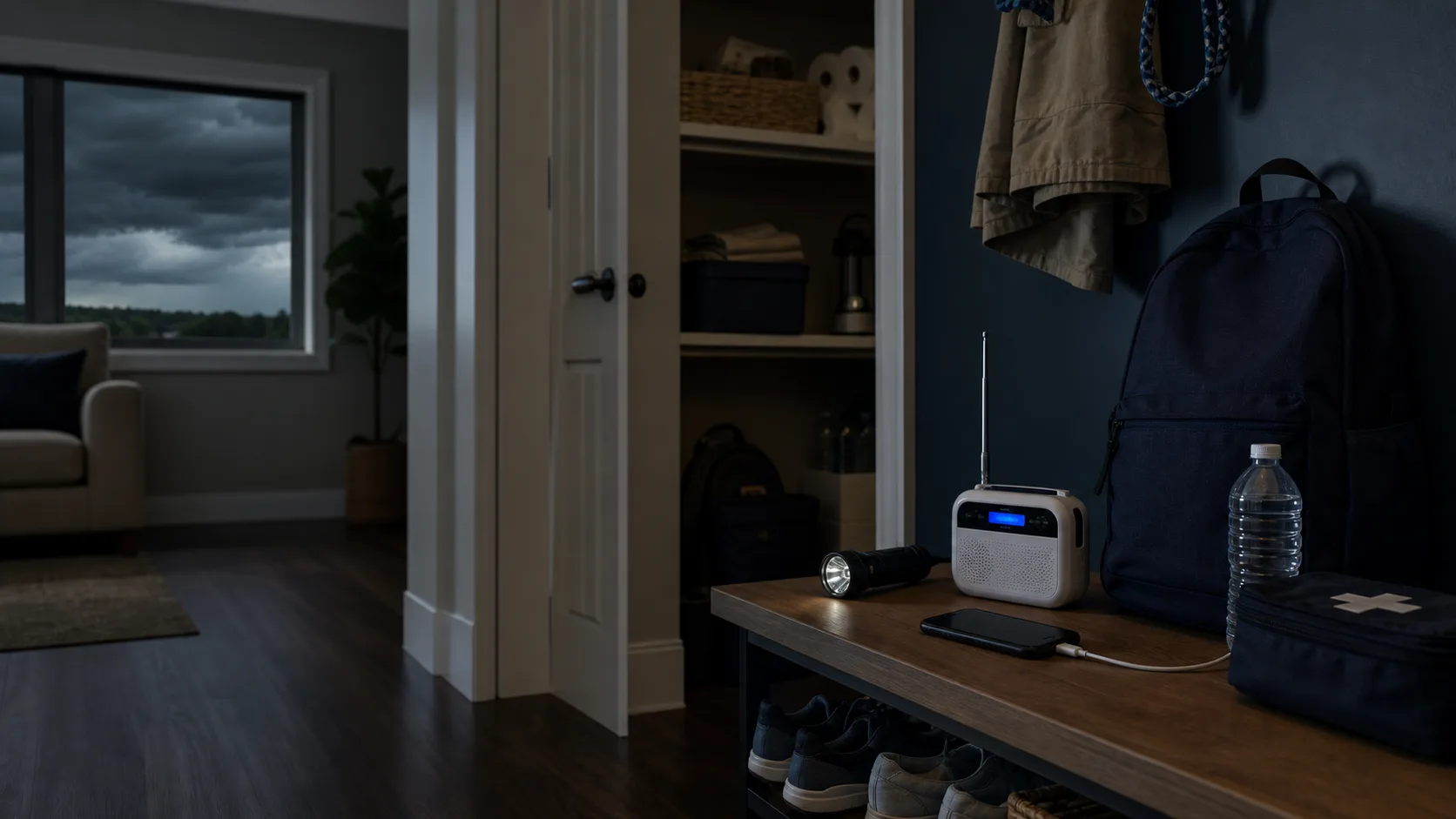
A tornado watch means weather conditions can support tornadoes in or near the watch area. You do not normally need to shelter immediately, but you should prepare now: turn on reliable alerts, choose the safest room in your building, bring essential items close by, and avoid plans that would make a fast response difficult. If a tornado warning is issued for your location, stop preparing and take shelter right away.
The useful distinction is simple. A watch gives you time to make decisions before storms are on top of you; a warning means a tornado is occurring or expected soon and calls for immediate action. The National Weather Service and Ready.gov both stress having a way to receive warnings and knowing your safe location ahead of time. Here is how to use a watch well without treating it like a reason to panic.
Confirm whether the watch includes you
Start with the actual alert, not a social-media screenshot or a general forecast headline. A tornado watch can cover many counties and may last for several hours. Check your county or city in a National Weather Service alert, your local emergency-management agency, or a trusted local broadcaster. Note the watch expiration time, but keep checking because conditions and warnings can change.
If you are unclear about the terms, read our quick guide to a tornado watch vs. tornado warning. A watch does not mean a tornado is headed to your house. It does mean the atmosphere is favorable enough that you should be ready to act if a warning is issued.
Choose your shelter before a warning arrives
The best place is a purpose-built safe room or storm shelter. If you do not have one, identify a basement or a small, interior, windowless room on the lowest floor of a sturdy building. A bathroom, closet, or interior hallway may be the best available option. Stay away from windows, exterior walls, and wide-open rooms.
Do this while the weather is still calm. Walk everyone in the household to the spot, including children and guests, and clear a path to it. If the room is usually locked, blocked with storage, or occupied by a pet crate, solve that problem during the watch. A two-minute decision made early is much easier than a rushed one when an alert sounds.
People in mobile or manufactured homes need an earlier plan. Those homes are not safe tornado shelters. During a watch, identify a nearby sturdy building or designated community shelter, confirm how to enter it, and plan to leave before dangerous weather is close. Do not wait for a warning to begin figuring out where to go.
Set up more than one way to get a warning
Outdoor sirens are designed for people outside; they may not wake you or be audible indoors. A tornado watch is the right time to check your phone's Wireless Emergency Alerts and make sure it is charged. Keep a weather radio, local emergency alerts, or a trusted local broadcast source as a backup.
Put the phone and a charging cable near your shelter area. If you use an app, make sure it is allowed to send notifications. A battery-powered flashlight is worth keeping there too. The point is not to build an elaborate kit in the middle of a storm. It is to avoid hunting for basics after a warning has already begun.
Make the next few hours easier
A watch is a sensible reason to pause unnecessary errands, outdoor activities, and long drives. Check the timing in the local forecast and decide whether you can finish an essential trip well before storms arrive. If you must travel, share your route, keep your phone charged, and identify sturdy buildings you could enter if conditions deteriorate. Never plan to shelter beneath a bridge or overpass.
At home, bring pets inside if it is safe to do so, and keep leashes, carriers, and any required medication within reach. Put shoes by the shelter location; debris and broken glass can be hazards after a storm. Keep a small amount of drinking water, a flashlight, and a portable charger handy, but do not let gathering supplies delay you once a warning is issued.
This is also a good moment to make sure household members know how alerts will reach them at night. Google autocomplete suggestions commonly pair this query with "at night," "at home," and "in an apartment"—all versions of the same practical problem: the safest decision is easiest when the shelter and alert plan are already settled.
Know the trigger to stop preparing and shelter
When a tornado warning is issued for your area, go immediately to the safe space you chose. Do not wait to see a funnel cloud, open windows to "equalize pressure," or use the time to collect extra belongings. Cover your head and neck with your arms, a helmet, or thick padding that is already close by, and keep receiving official updates.
Weather can look temporarily quiet between storms, so do not assume the danger has passed based on what you see outside. Follow the warning's affected locations and expiration time, then use local official guidance for the all-clear. Our detailed tornado warning safety plan explains what to do in a house, apartment, vehicle, or public building once that higher-level alert arrives.
Keep the plan proportional
What is known during a watch is that tornado-friendly conditions exist; what is not known is whether a tornado will form, where it will track, or whether it will affect your address. That uncertainty is exactly why preparation, rather than panic, is the right response. You do not need to spend the entire watch in a closet. You do need to stay reachable, stay informed, and avoid being caught with no safe option.
For the official guidance behind this checklist, use Ready.gov's tornado preparation page and the National Weather Service tornado safety page. Your concrete next step: choose your household's interior shelter today and place a charged alert device, shoes, and flashlight beside it before the next watch is issued.