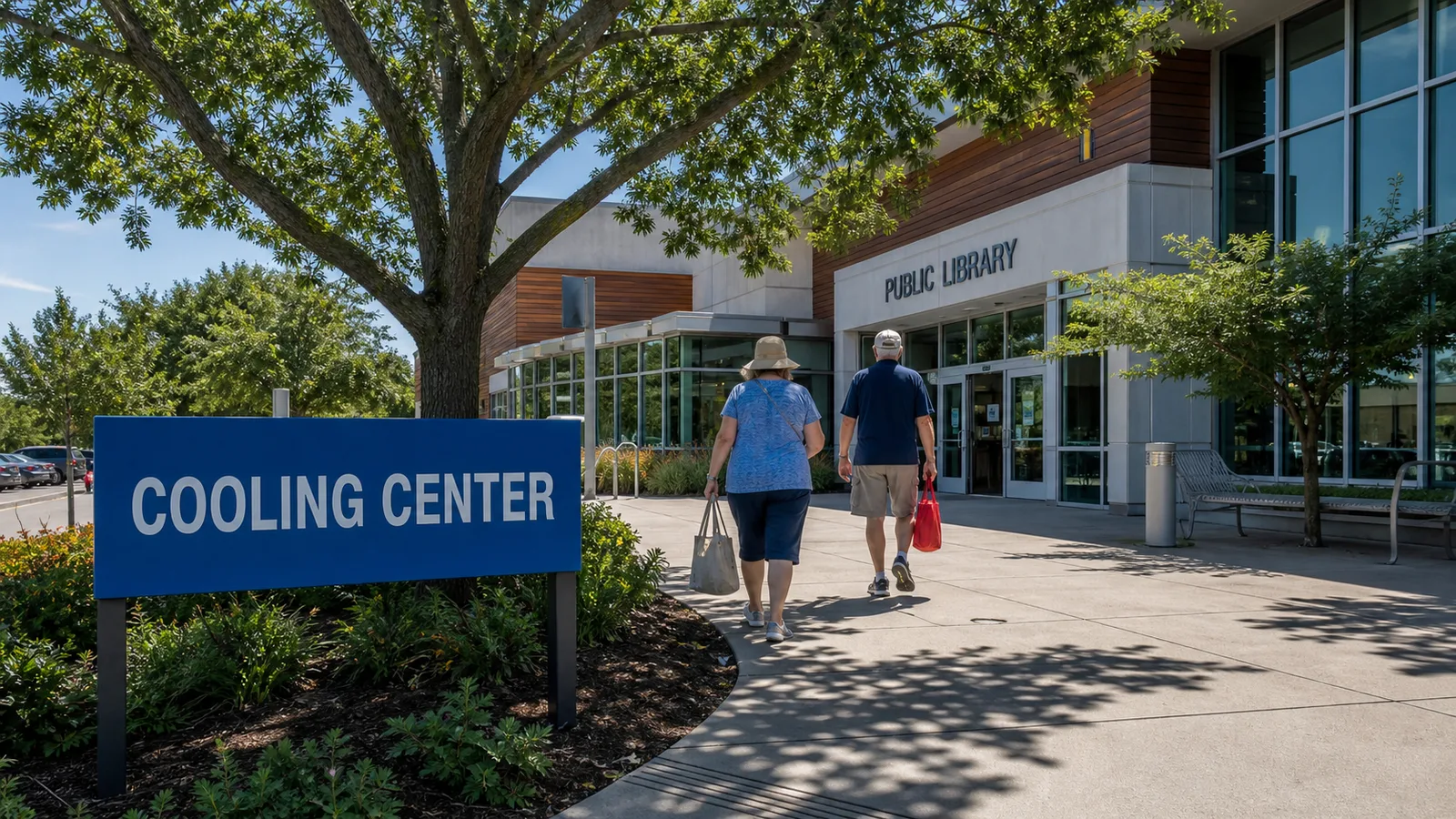
If you need to find a cooling center near me during a heat wave, start with your city or county emergency-management or public-health website, then check local alerts, libraries, recreation centers, and 211. Confirm the address, hours, transportation, and any rules before you leave. A cooling center is not a single national network: communities open them at different times, often only during an active heat alert, so the most useful answer is always local.
Start with an official local alert
Search for your city or county name plus “cooling centers,” then look for a page from local government, public health, emergency management, or a public library system. During an extended hot spell, many communities publish a map or a short list of temporary sites. Some place the notice on the same page as a heat advisory or excessive-heat warning.
Your local National Weather Service forecast is a good second stop. It can tell you whether an alert is active, when the worst conditions are expected, and whether overnight temperatures will stay high. The National Weather Service heat-safety guidance explains why several hot days and warm nights can raise risk even if one afternoon does not look extreme by itself.
What is known: air-conditioned public places can provide a safer break from dangerous heat. What is not known from a national article is which building is open in your neighborhood today. Do not assume that a site used in a previous heat wave is open now.
Use 211 and local public services when a list is hard to find
If search results are messy or you do not have reliable internet, call 211 where it is available. The 211 service connects callers with local community resources and may be able to point you to cooling locations, transportation, or other heat-related help. Availability and the information it has can differ by area, so ask for the closest currently open cooling center and write down the address and hours.
Also check places that commonly serve as temporary cooling sites:
- Public libraries and community centers
- Senior centers and recreation centers
- City halls or other municipal buildings
- Shopping malls or other air-conditioned public spaces, if no official center is open
These are not automatically cooling centers. A library may be open but have shorter weekend hours; a center may require registration for a particular program; and a mall is not a substitute for emergency assistance. Call, check the official posting, or ask staff before counting on a location.
Confirm four details before you travel
A nearby pin on a map is not enough. Before leaving, verify:
- Today’s hours. Heat sites can open late, close early, or operate only while an alert is in effect.
- Who can enter. Check whether the site welcomes all adults, families with children, older adults, or people with pets.
- Transportation. Find out whether a bus route, paratransit option, ride from a neighbor, or local shuttle is available.
- What to bring. Take water, essential medications, a phone and charger, identification if the site requests it, and items needed for children. Do not bring more than you can carry safely in the heat.
If the trip itself involves a long walk or waiting outside, arrange it for a cooler part of the day when possible. Wear lightweight clothing, take water, and do not push through dizziness or weakness just to reach the building.
Make a backup plan if the closest center is closed
Local centers can fill up, close, or be farther away than expected. Pick one backup indoor place with air conditioning and tell someone where you are going. A trusted friend or relative’s home may be the most practical option. If you are helping an older neighbor or someone without transportation, offer a ride or set a specific time to check in.
Ready.gov recommends spending time in air-conditioned buildings during extreme heat and checking on people who are more likely to struggle with it. Its heat guidance is a useful national checklist, but local officials decide which nearby buildings are open and how they operate.
For a broader plan, see our guide on what to do during a heat dome. It explains how to follow the local alert rather than relying on a broad weather headline. If you are planning to exercise or run errands, our daily water guide can help with ordinary hydration habits, but it does not replace a cool-place plan during dangerous heat.
Know when this is more than a search for a cool room
Move to a cooler place promptly if you or someone with you has heavy sweating, weakness, dizziness, nausea, headache, or cramps. Rest and cool down. If symptoms worsen, last longer than an hour, or include vomiting, get medical help.
Confusion, fainting, seizures, or loss of consciousness can be signs of heat stroke. Call 911 immediately and begin cooling the person while help is on the way. Do not give fluids by mouth to someone who is confused or unconscious. Our heat exhaustion vs. heat stroke guide covers the warning signs in more detail.
Your next step
Open your local forecast now, search your city or county’s official cooling-center page, and save one open location plus one backup in your phone. Then confirm how you will get there before the hottest part of the day. That small bit of planning is more useful than waiting until an overheated home becomes an emergency.