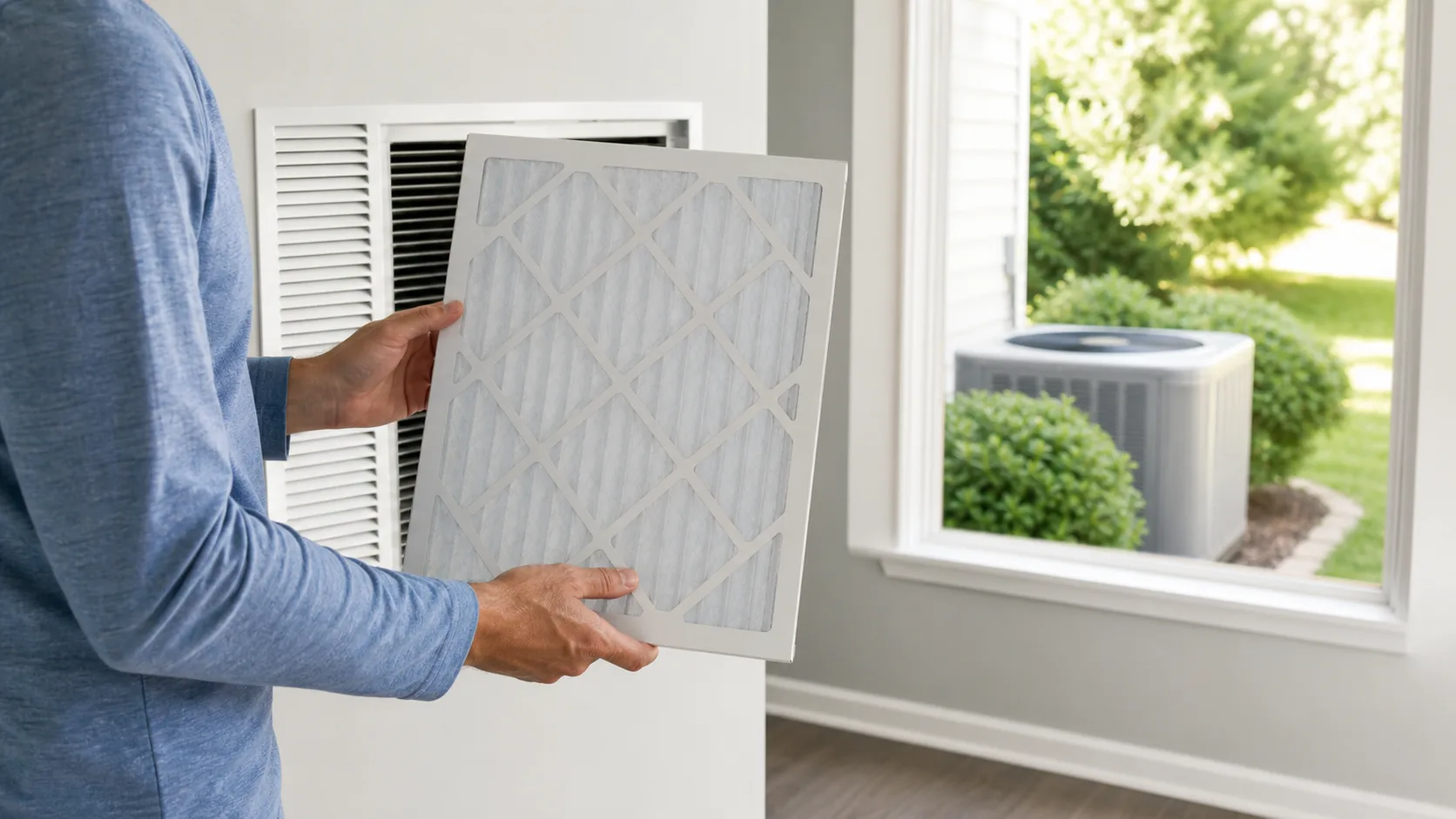
If you want to maintain central air conditioning during a heat wave, start with the safe basics: check or replace the filter with the right size and type, make sure indoor vents are open and unobstructed, clear leaves and loose debris from around the outdoor unit, and confirm the thermostat is set to cool. Do not open electrical panels, handle refrigerant, or try to clean internal parts yourself. If the system is blowing warm air, repeatedly shutting off, leaking, or making new noises, call a licensed HVAC professional rather than experimenting in the heat.
Do the quick, safe checks first
The best homeowner maintenance is simple and low-risk. Energy Star's heating and cooling maintenance checklist recommends keeping equipment and airflow in good shape, while reserving service work for a professional.
Start indoors. Look at the thermostat and confirm it is in cooling mode, the temperature setting is below the current room temperature, and the fan setting is where you normally keep it. Then walk through the home: supply registers should be open, and return grilles should not be covered by furniture, rugs, boxes, or curtains. Closing many vents to force cooling into one room can reduce airflow and may make the system work less effectively.
This is also a good time to check that doors and windows are closed and that blinds or curtains are blocking direct afternoon sun. Those steps do not repair an air conditioner, but they reduce the heat the system has to remove.
Check the air filter the right way
A dirty filter can restrict airflow. Before buying a replacement, turn the system off at the thermostat if your equipment instructions call for it, then slide the existing filter out and read its dimensions and airflow-direction arrow. Use the size and type specified for your system; do not force a filter that almost fits.
If the filter looks loaded with dust or is past the replacement interval printed on it, replace it. Some washable filters can be cleaned only if the manufacturer says so. Let a washable filter dry completely before putting it back. A damp filter is not a shortcut worth taking.
There is no universal calendar for every home. Pets, renovations, smoke, allergies, the filter type, and how often the system runs can all change the interval. The useful habit is to inspect it regularly during cooling season and follow the filter and equipment instructions. If you are uncertain about the correct filter, bring the old one or a photo of its label to a retailer, or ask your HVAC company.
Give the outdoor unit breathing room
Your outdoor condenser needs room for air to move through it. With the unit off, pick up loose leaves, grass clippings, sticks, and other debris around it. Keep shrubs, stacked items, and outdoor furniture from crowding the sides. Energy Star's guidance on clean heating and cooling equipment emphasizes keeping the area around the unit clear.
Do not pry open the cabinet, straighten fins with improvised tools, remove panels, or spray water into electrical areas. Do not cover a running unit with a tarp or decorative enclosure. Those actions can damage equipment or create a safety hazard. If dirt appears packed into the coils or the unit needs more than a gentle exterior tidy-up, schedule service.
Keep lawn mowers and trimmers aimed away from the unit. Grass clippings can collect on the coil surface, especially in the middle of a long hot spell when the equipment is already running hard.
Use the thermostat without overworking the system
Set a comfortable temperature you can maintain instead of making dramatic changes every few hours. Lowering the thermostat far below the room temperature does not make the air cool faster; it simply tells the system to run longer. Frequent large setbacks can also leave a home uncomfortable when outdoor heat is at its peak.
If you have a programmable or smart thermostat, use a modest schedule that fits when people are home. During an active heat alert, avoid a schedule that lets the house become very hot before people return. Check the manual before changing advanced settings, and replace thermostat batteries if your model uses them and the display warns you.
For broader heat planning, see what to do during a heat dome. Cooling equipment works best as one part of a plan that also reduces indoor heat and follows local weather alerts.
Know which jobs belong to an HVAC professional
Routine homeowner checks have a clear boundary. Refrigerant is not a do-it-yourself top-up, and electrical components, capacitors, disconnects, internal coils, drain problems, and duct repairs deserve trained service. A technician can inspect parts that are not safely accessible and perform the seasonal maintenance specified for your system.
Call a qualified HVAC professional if you notice any of these signs:
- Air is warm or much weaker than usual after basic settings and filter checks.
- The system cycles on and off repeatedly, trips a breaker, gives off a burning smell, or makes a new grinding, buzzing, or banging sound.
- Water is pooling near indoor equipment, ice is visible on refrigerant lines, or there is an unexplained refrigerant-like odor.
- Parts of the home remain unusually hot even with open vents and a clean filter.
If you smell smoke, see sparking, or suspect an electrical hazard, move away from the equipment and seek urgent help. Do not reset a breaker repeatedly to keep the air conditioner running.
Have a heat backup plan while you wait
Even well-maintained equipment can fail. If cooling stops during dangerous heat, do not make risky repairs just to get it running. Close blinds, avoid heat-producing chores, drink water regularly, and arrange time in an air-conditioned building. Our guide on staying cool without air conditioning during a heat wave explains practical short-term steps and why a fan alone is not enough during dangerous heat.
Check local government or public-health notices for cooling sites, or use our guide to finding a cooling center near you. Older adults, young children, people with medical conditions, and anyone without reliable transportation may need a plan before the hottest hours arrive.
A 10-minute pre-heat-wave checklist
Before the next hot week, inspect the filter, clear the area around the outdoor unit, open unobstructed vents, verify thermostat settings, and write down the number of a qualified HVAC company. Then check the local forecast and choose a cool backup location. The goal is not to turn yourself into an HVAC technician. It is to keep airflow and surroundings in good shape, recognize trouble early, and stay safe if the system needs professional attention.