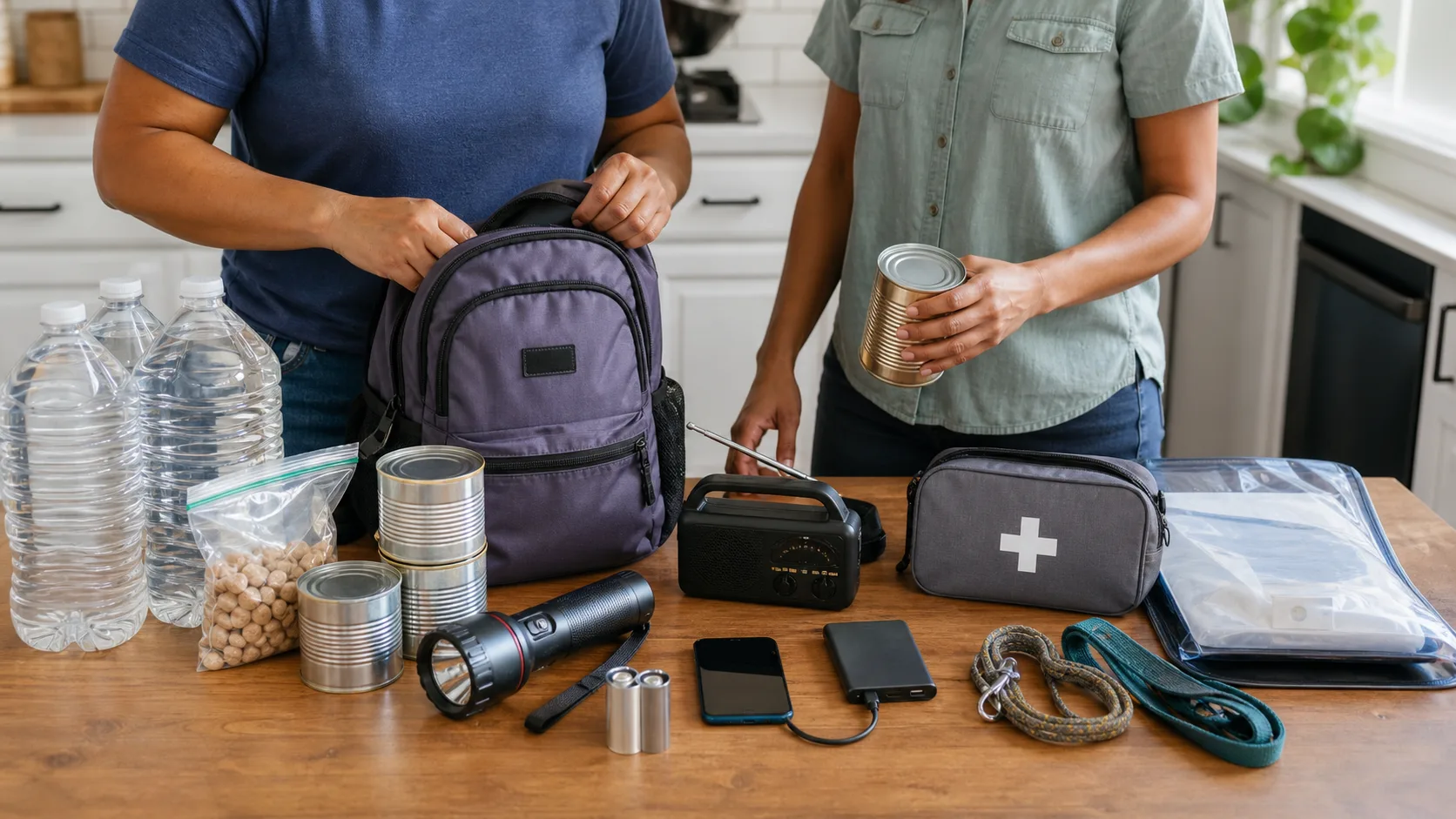
The simplest family emergency kit is a sturdy, easy-to-carry container with water, shelf-stable food, light, basic first aid, key documents, and the supplies your household actually uses. Start with enough water and food for several days, then add medications, a radio, chargers, pet items, and a written contact plan. You do not need to buy everything at once: build it over a weekend, store it where everyone can reach it, and follow local emergency officials for any situation-specific instructions.
Start with the container and a realistic goal
Use a backpack, plastic bin, or small rolling tote that is easy to find and carry. Put it somewhere dry and accessible—not behind a stack of holiday boxes. A home kit is the best first priority. If your family drives often or may need to leave quickly, a smaller duplicate bag for the car can come later.
Ready.gov recommends preparing for several days of self-sufficiency. That does not mean trying to recreate a warehouse in your hallway. It means having the basics available if power, stores, water service, or normal communication are interrupted. Begin with the items below, then add only what makes sense for the people and pets in your home.
Water and food: keep the essentials simple
Water is the first item to buy because it is hard to improvise safely. Ready.gov advises at least one gallon per person per day for drinking and sanitation. Plan for several days, and consider extra water for hot weather, babies, older adults, nursing parents, and pets. Store commercially bottled water or water in clean, food-safe containers; check and replace it according to the container label.
For food, choose familiar shelf-stable items your family will eat:
- Canned beans, vegetables, fruit, soups, or meat
- Peanut butter, crackers, granola bars, nuts, and dried fruit
- Baby food or formula, if needed
- A manual can opener and simple utensils
- Pet food and a bowl for each pet
Rotate food into normal meals before it expires and replace it on your next grocery trip. Avoid building a kit around unfamiliar survival foods that no one enjoys or knows how to prepare. If a household member has a food allergy or needs a special diet, set aside safe options specifically for them.
Light, power, and reliable information
A power outage is easier to manage when the kit has more than one way to provide light and receive updates. Pack flashlights, extra batteries, and a battery-powered or hand-crank radio. Headlamps are especially useful because they leave both hands free. Keep candles out of the kit; an open flame adds avoidable fire risk when conditions are already stressful.
Add a phone charging cable, a charged power bank, and—if you have one—a car charger. Keep in mind that a phone may not always have service, so write down a few important numbers and meeting instructions on paper. During a hurricane or other severe-weather threat, use local emergency management and National Weather Service alerts for the instructions that apply to your area. Our guide to a tornado watch versus a tornado warning can also help your household understand those two alerts.
Medicine, first aid, and personal needs
Every kit should include a basic first-aid kit, but it should not substitute for a plan for prescription medicines or medical devices. Keep a current list of medicines, doses, allergies, doctors, and pharmacy contacts in a waterproof pouch. Ask a pharmacist or prescriber how to maintain an appropriate supply of essential medication; do not stockpile or change doses on your own.
Include practical personal items: spare glasses, hearing-aid batteries, menstrual supplies, diapers, wipes, hand sanitizer, masks if a household member needs them, and a change of clothes. If someone uses a powered medical device, make a specific backup-power and evacuation plan with their care team and local utility or emergency resources.
Protect documents, cash, and your contact plan
Place copies—not necessarily originals—of identification, insurance information, medical information, and emergency contacts in a waterproof, sealable bag. You may also want a photo inventory of valuables stored securely online or with a trusted contact. Keep only the sensitive information you truly need, and protect it from casual access.
Small bills can be useful if card readers or ATMs are unavailable, but the amount is a personal budget decision. More important is a simple communication plan: choose an out-of-area contact, write down their number, and decide where household members should meet if they cannot return home. Practice a quick check-in message with children and caregivers. A kit is stronger when it is paired with a plan—just as a home fire escape plan works best when everyone knows the meeting place in advance.
Do not forget pets and mobility needs
Put a leash, carrier, food, water, medication, vaccination information, and a recent photo for each pet near the kit. Identify pet-friendly places or a trusted caregiver before an emergency; shelters and hotels may have different rules. If your household includes someone with a mobility, vision, hearing, or cognitive need, tailor the kit and contact plan with their input. A generic checklist is only a starting point.
Make a 20-minute refresh routine
Set two calendar reminders each year, such as the daylight-saving time changes or the start of hurricane season. On refresh day, replace expired food, inspect water, test flashlights and power banks, update documents, and review the family contact plan. Let children help identify the kit and learn the meeting plan without making it scary.
For weather-specific preparation, add the relevant local steps rather than guessing. Our hurricane preparedness checklist covers storm-season decisions such as evacuation zones and securing outdoor items. For every hazard, local officials have the final word on whether to shelter, evacuate, or take another action.
The best kit is the one you can use today
Start with water, food, light, first aid, and contacts. Then build around your household’s real needs and keep the kit current. For the official master list and printable guidance, review Ready.gov’s Build a Kit page. For hurricane safety information and alerts, use the National Weather Service hurricane safety guidance. A calm, modest kit prepared now is far more useful than a perfect one you mean to assemble later.