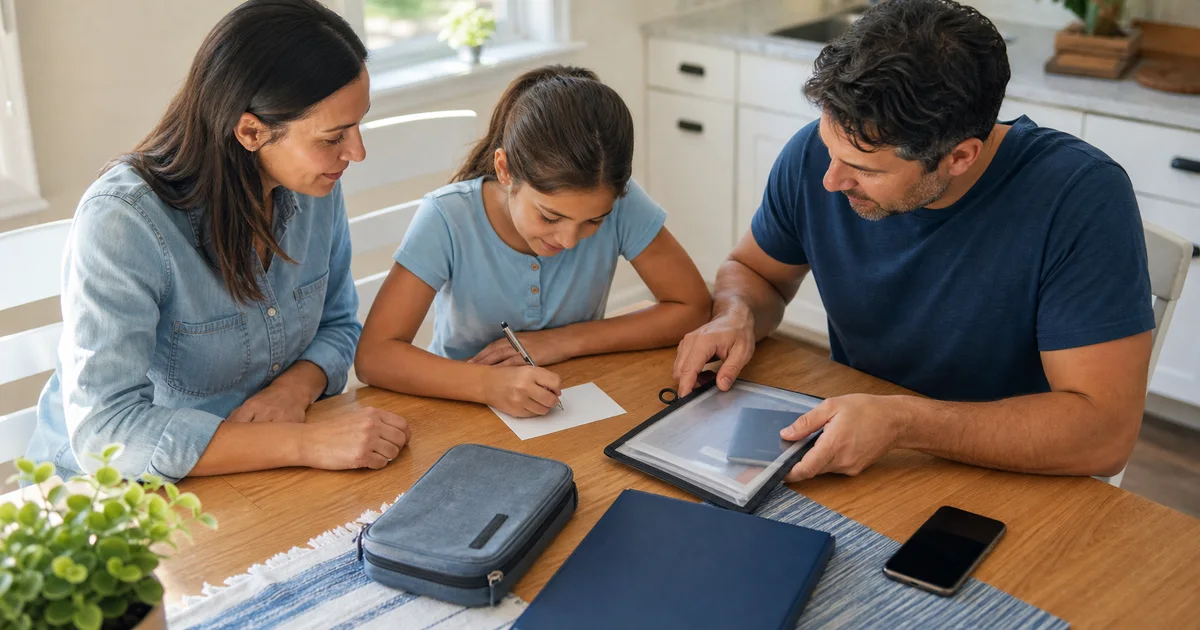
You can make a useful family emergency contact plan in one sitting: choose one out-of-area contact, set two meeting places, put key numbers on a paper card, and save protected copies of essential documents in both a waterproof portable place and a secure digital location. Keep the plan simple enough for everyone to use, including children and caregivers. In an actual emergency, follow instructions from local officials; this is the preparation that makes it easier to reconnect and find what you need.
Start with the people and places
Ready.gov recommends that families make a communication plan before they need one. Begin by listing every person who should be accounted for: household members, regular caregivers, and anyone who might be responsible for picking up a child. Include phone numbers, email addresses if useful, and one alternate way to reach each person.
Next, choose an out-of-area contact. This should be a trusted adult who lives far enough away that the same local problem is less likely to disrupt them. Ask their permission first. Give them the names and numbers of the people in your household, and agree that family members will send a short check-in if they are separated. A quick message such as “I’m safe at the library” is more useful than a long update when service is limited.
Pick two meeting places and write them down:
- One just outside your home, for a situation where everyone can leave safely.
- One outside the immediate neighborhood, such as a library, community center, or trusted friend’s home, for a situation where returning home is not possible.
Choose locations that are easy to describe and appropriate for your household. Do not assume a familiar store or parking lot will always be open. For a fire-specific plan, review how a home fire escape plan uses a single, clearly identified outdoor meeting place.
Make a paper card that works without a charged phone
Phones are helpful, but a phone may be lost, out of battery, or unable to connect. Make a small paper contact card for each person who can carry one. Put the out-of-area contact first, then the names and numbers of caregivers and your two meeting places. Add any information a child needs to identify themselves, such as a caregiver’s name and phone number.
Keep the card plain. It does not need account numbers, passwords, medical histories, or a detailed daily schedule. A child’s card should contain only the information they need to reconnect safely. Review the cards with the people who will use them, and put one in a backpack, wallet, or other routine item.
Agree on a simple check-in sequence: first get to a safe place, then contact the out-of-area person, then conserve battery and wait for the next agreed update. Text messages may go through when voice calls are difficult, but conditions differ. The important part is that everyone knows whom to try first instead of repeatedly calling one another.
Gather document copies, not a giant binder
Document backup is about access, not carrying every original. Make copies of the records that would be difficult to recreate quickly or may be needed for identification, care, housing, insurance, or financial recovery. A practical starting list is:
- Government-issued identification and proof of address
- Health, home, renters, auto, and life insurance information
- A current medication list, allergies, care instructions, and health-care contacts
- Birth, marriage, custody, or guardianship records that apply to your family
- Pet vaccination records and a recent photo of each pet
- Key financial and account contact information, without writing passwords on the copies
Use the plan to notice household-specific needs. If a child takes medication at school, our school health forms and medication checklist can help keep the school-facing information current. If someone uses a mobility aid, relies on powered medical equipment, or needs communication support, ask them what information and backup arrangements belong in the plan. A generic list is only a starting point.
Store copies in two protected places
Keep paper copies in a sealed waterproof pouch or container that is easy to take if you need to leave. Store it somewhere accessible but not obvious to every visitor. Protect originals according to their importance; some may belong in a secure location rather than in a grab-and-go pouch.
Also keep secure digital copies in an account your household can access away from home. Use a strong, unique password and multi-factor authentication where available. Do not send sensitive documents through group texts or leave them in an unprotected shared folder. Decide who needs access, how they will access it, and what happens if the primary account holder cannot log in. Our basic family emergency kit checklist covers the physical supplies that complement this paperwork and communication plan.
For account details, make a separate access plan rather than printing passwords. A password manager’s emergency-access feature, recovery instructions stored securely, or a trusted co-owner may be appropriate depending on your situation. Test the plan without exposing private information: can the right adult find the insurance number, medication list, and out-of-area contact from another device?
Include children, older adults, pets, and caregivers
Walk through the plan in calm language. Children should know who can pick them up, the two meeting places, and how to show or use their card. Let a regular babysitter, neighbor, or caregiver know the out-of-area contact and where the paper plan is kept. Do not expect one person to remember every detail.
For older adults or people with disabilities, ask directly about preferred communication methods, mobility needs, service animals, and the people authorized to help. Add pet details, a leash or carrier location, and a backup caregiver to the contact list. Ready.gov’s Make a Plan guidance includes planning considerations for children, older adults, people with disabilities, and pets.
Test and refresh it twice a year
Set two calendar reminders each year. On refresh day, call the out-of-area contact, confirm numbers and meeting places, update medication and insurance information, replace worn cards, and check that digital files still open. Practice a short “we are separated” scenario so every household member knows the first step.
This planning does not replace local instructions during a real event. Keep alerts enabled, use official local information, and change course when authorities tell you to evacuate, shelter, or avoid an area. For a broader printable preparation list, see Ready.gov’s Build a Kit guidance. A small plan that is current, shared, and protected is far more valuable than a detailed folder no one can find.