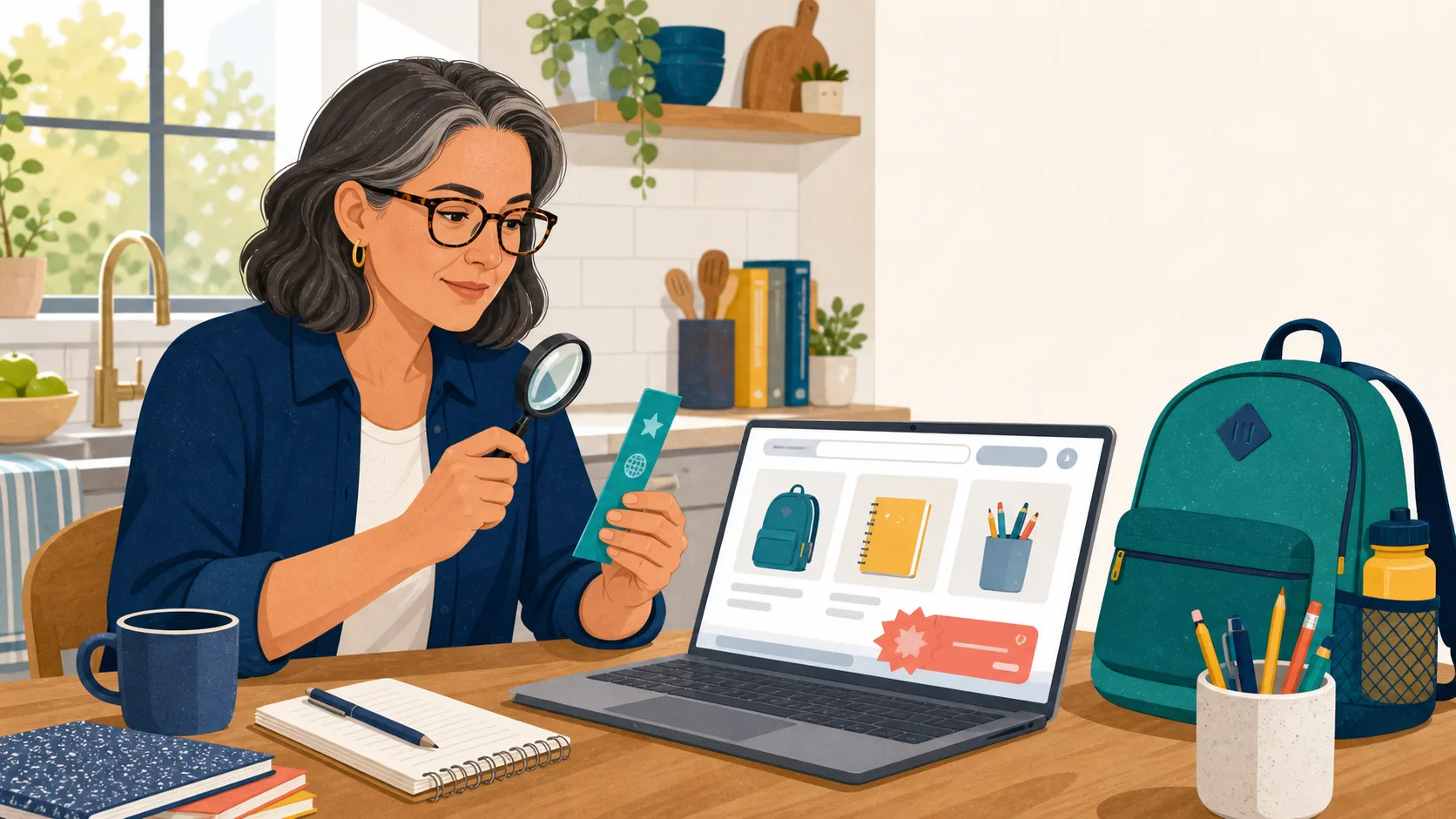
Say a Facebook ad shows a backpack half-off with a countdown clock ticking down. Tempting, especially with school starting. But here's how to avoid back-to-school online shopping scams: before you buy anything online, give yourself five minutes to check the seller, not just the price.
The two-tab trick
Open two browser tabs. In one, search the retailer's name yourself and click their real site from the results. In the other, keep the ad or link that caught your eye. Compare the web addresses side by side before you type in any payment details.
A look-alike address is much easier to spot this way, once the flashy offer isn't your only reference point. A padlock icon and a nice-looking site don't prove a seller is legitimate — scammers use those too.
For the actual list of what your kid needs (versus what looked tempting), our back-to-school budget checklist helps sort that out first.
Find out if the seller is real
Search the business name with words like "reviews" or "scam" — don't just trust the star rating on their own site. One bad review doesn't mean much, but a pattern of "never arrived" or "wrong item" absolutely does.
Also glance at the photo and price. If the same product photo shows up on five random stores, or the price feels too good, that's the hook working as intended.
Slow down when it feels urgent
Countdown timers, "only 2 left," and panicked delivery texts are all designed to rush you past your own good judgment. If a message says there's a problem with your order, don't tap its link — open the retailer's app yourself and check your order history. The Federal Trade Commission has repeatedly warned that these urgency tactics often lead to a fake product, a counterfeit, or a surprise charge.
Pay in a way you can undo
Once you're confident a seller is real, pay with a credit card or a payment service that offers dispute rights — never a gift card, wire transfer, or crypto. Those can't be reversed once they're gone. CISA gives the same advice for any online shopping season.
While you're at it, use a unique password for the store account and turn on multi-factor authentication if it's offered — the same habit worth setting up on a new school laptop.
Keep a paper trail
Save the order confirmation and return policy in one folder, and check your card statement against what you expected to pay. If something looks wrong, or you typed your card into a site that turned out fake, call your card issuer using the number on your statement — never a number from the suspicious site. If you signed in from a shared computer, it's worth a quick look at who else is signed into your accounts.
Report anything suspicious to ReportFraud.ftc.gov. It won't get your money back, but it helps the FTC spot the pattern faster for the next person.
Five minutes now beats an afternoon on hold with your bank later.
Sources
- Federal Trade Commission: Shopping scams and back-to-school shopping
- Cybersecurity and Infrastructure Security Agency: Keep Holidays Merry and Bright with Safe Online Shopping Tips